5 Treks in Nepal That Can Fit a $500 Budget (8–10 Days)

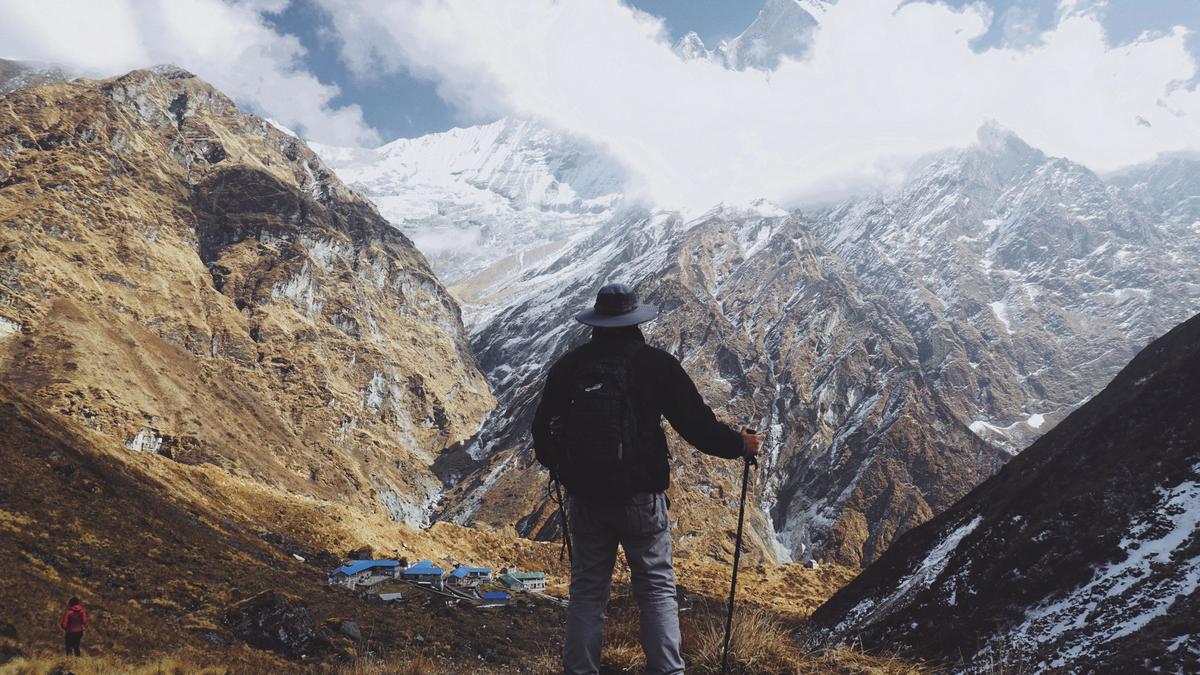
Planning an 8–10 day trek in Nepal with a US$500 budget? Compare five routes, see what the budget assumes, where costs rise, and which trek may suit you best.
A budget of $500 can be enough for an 8–10 day trek in Nepal. But it depends a lot on the route you choose and how you travel.
Some treks are easier to keep within budget because they use road transport, simple teahouses, and shared arrangements. Others may look affordable at first but become more expensive once you add private transport, a porter, extra days, or daily comforts on the trail.
This is not simply a list of treks with low starting prices. These are five routes that can realistically fit a $500 budget when two or more travelers share key costs and keep personal extras modest.
What “Under US$500” Means in This Guide
The figures in this guide are planning ranges, not fixed package prices. They are based on a simple, budget-conscious way of trekking.
For each route, the estimate assumes:
- Two or more trekkers travelling together, with lower guide pricing and transport.
- Road transport from Kathmandu rather than domestic flights
- Required permits and paperwork
- Basic twin-share teahouse rooms during the trek
- Three simple meals a day, plus a few hot drinks
- Carrying your own backpack instead of hiring a porter
The budget does not include international flights, a Nepal visa, travel insurance, trekking gear, hotel nights before or after the trek, tips, alcohol, regular snacks, or paid extras such as hot showers, charging, Wi-Fi, and private transport.
A porter, an extra rest day, or a private jeep may still be the right choice for you. The point is not to avoid them. It is to plan for them before the trek begins instead of treating them as unexpected costs.
Solo travelers should allow a little more room in the budget. Guide pricing is usually higher for one person, and transport can also cost more per traveler. This means the total may come close to, or go above, $500.
One more point about duration: the 8–10 days in this guide refers to the full Kathmandu-to-Kathmandu trip, including the journey to and from the trailhead.
Quick Comparison: Which Trek Fits You Best?
| Trek | Full Trip Duration | Budget Fit | Best For |
|---|---|---|---|
| Annapurna Base Camp | 9–10 days | Possible, but tight | A full Himalayan base-camp journey |
| Langtang Valley | 8 days | More realistic for two or more trekkers | Mountains, villages, and a deeper valley experience |
| Mardi Himal | 8 days | Usually gives the most room within the budget | Close Annapurna views with fewer walking days |
| Pikey Peak | 8–9 days | Possible with shared road logistics | Everest views without a Lukla flight |
| Helambu | 8 days | One of the easier routes to keep within range | Lower altitude and simpler access from Kathmandu |
The lowest-cost trek is not automatically the right one. The better question is what you want the journey to feel like, how much altitude you are comfortable with, and how much room you want in the budget for personal choices
1. Annapurna Base Camp Trek: The Full Base-Camp Experience
For travellers who want their first trek in Nepal to end at a real Himalayan base camp, Annapurna Base Camp is the clearest fit on this list.
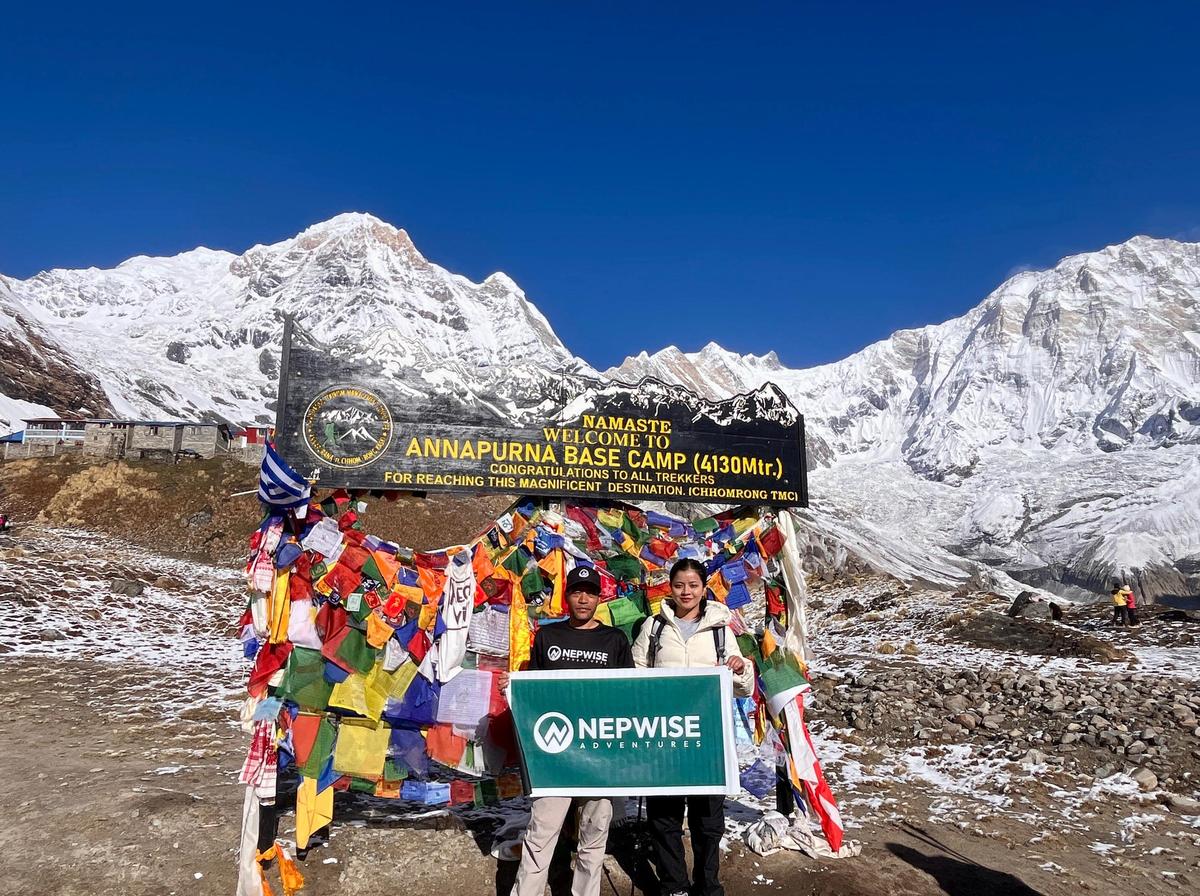
The route moves through lower villages, forests, suspension bridges, and narrow valleys before opening into the Annapurna Sanctuary. By the time you reach Annapurna Base Camp at 4,130 meters, you are surrounded by high peaks rather than looking at them from a distant viewpoint.
An 8-day ABC trek usually begins and ends around Pokhara. If you are traveling from Kathmandu by tourist bus, allow roughly two additional road-travel days. This makes the full trip closer to 10 days in total.
ABC can fit within a $500 budget, but it is one of the tighter options on this list. It normally works when at least two trekkers share guide and road-transport costs, use basic teahouse accommodation, choose practical transport, and carry their own backpacks rather than hiring a porter.
The budget becomes harder to maintain when travellers add private jeep transfers, a porter, extra nights, or regular paid extras such as hot showers, charging, Wi-Fi, snacks, and alcohol. Food and drinks are also an important daily variable, especially at higher villages.
None of those choices are wrong. The important thing is to decide where you want more comfort or flexibility before the trek begins, rather than discovering those costs along the way.
For a detailed cost breakdown, see Annapurna Base Camp Trek Under US$500.
2. Langtang Valley Trek: A Deeper Valley Journey With Mountain Views
Where ABC is built around reaching one dramatic destination, Langtang Valley feels more like a journey through a mountain valley.
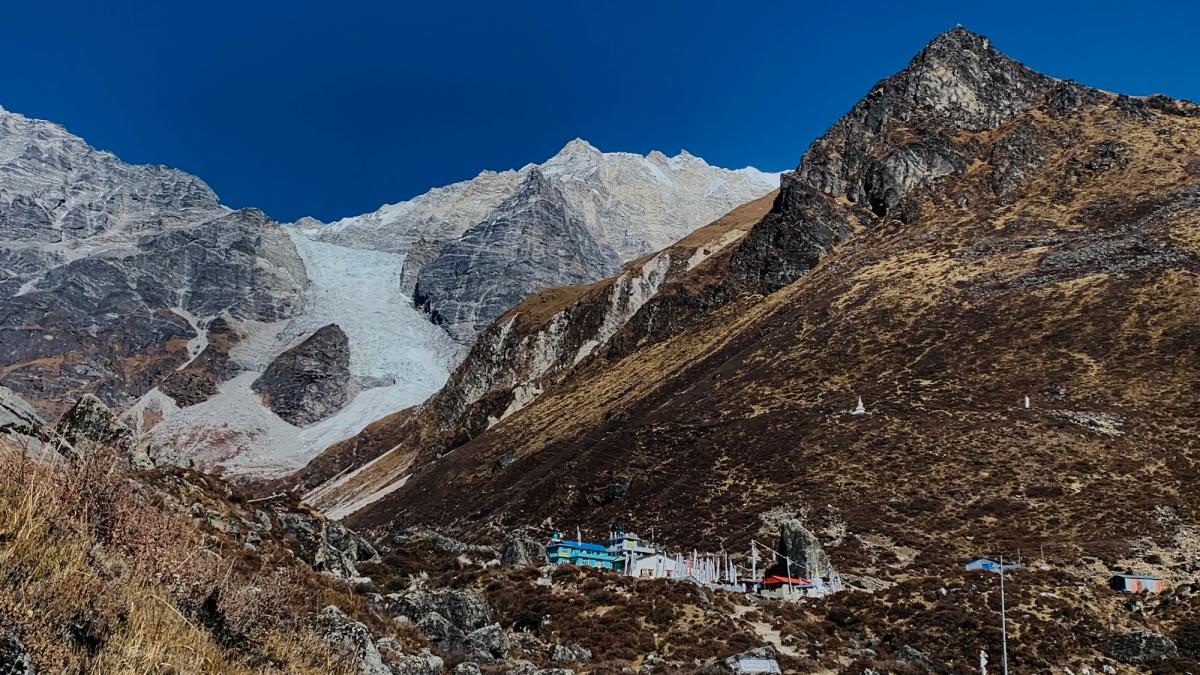
The trek starts with a drive from Kathmandu to Syabrubesi. From there, the trail follows the Langtang Khola through forest, small settlements, and Tamang villages before the valley opens around Langtang Village and Kyanjin Gompa.
Budget-wise, Langtang is one of the more straightforward options because the journey starts and ends in Kathmandu. There is no separate trip to Pokhara and no domestic flight.
For two or more trekkers sharing key costs, it can usually fit within a $500 budget with simple teahouse rooms and practical food spending.
Solo travelers should be more careful with this budget. The per-person guide price is normally higher for a solo trekker, and transport options may also be less economical.
As a result, the same trek may sit near or slightly above the $500 line. An extra night at Kyanjin Gompa can still be worthwhile if you want more time to rest or hike, but it should be included in the plan before you begin.
For a detailed cost breakdown, see 8 Days Langtang Valley Trek Under $500.
3. Mardi Himal Trek: Close Annapurna Views in a Shorter Route
Mardi Himal Trek is different from the first two treks because the hiking route itself is shorter.
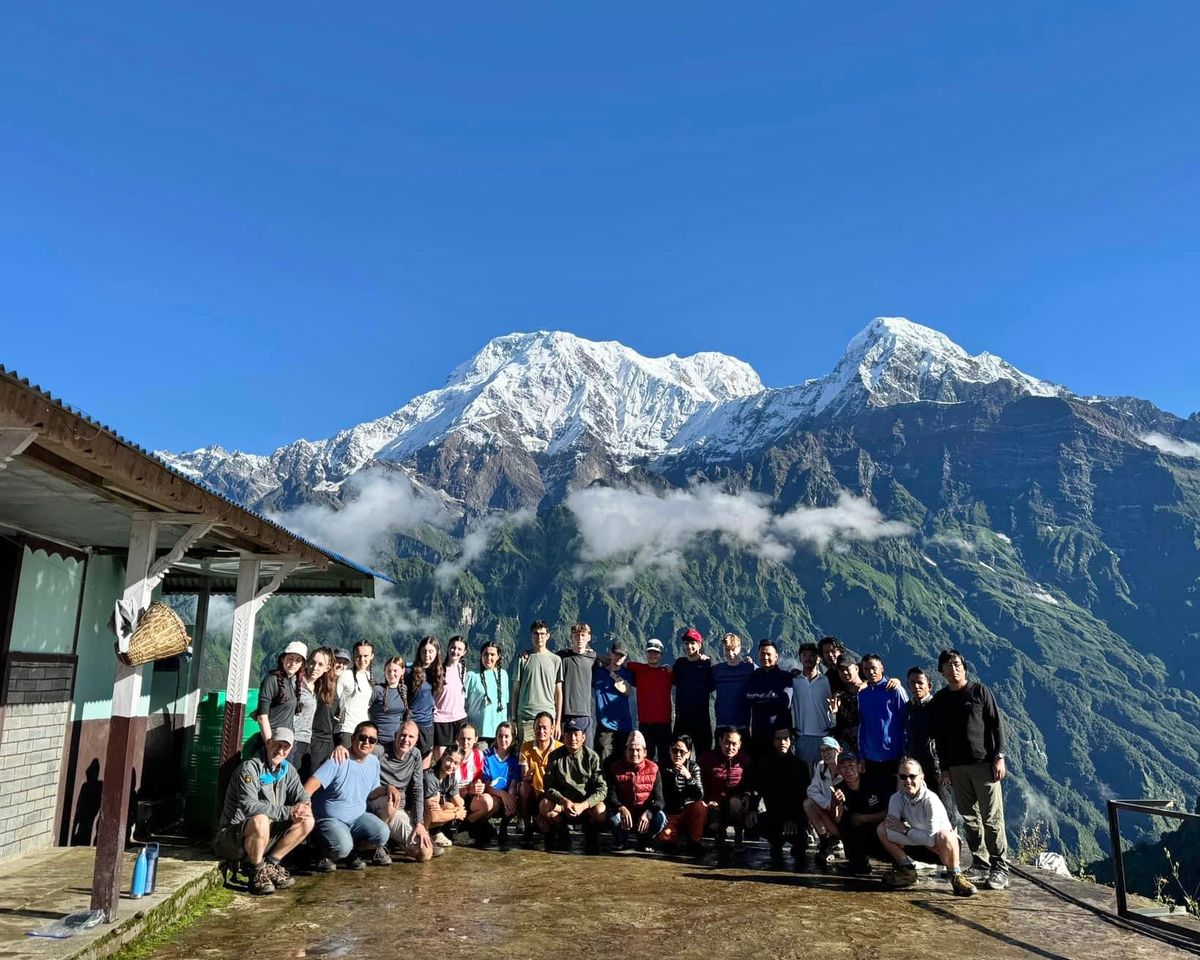
The usual trail takes around 5 to 6 hiking days. But once you include the drive from Kathmandu to Pokhara, the trek itself, and the return trip, it fits naturally into an 8-day Nepal itinerary.
The trail begins from the Pokhara side and climbs through forest towards Forest Camp, Low Camp, and High Camp. From the viewpoint area, Machhapuchhre, Annapurna South, and Hiunchuli feel much closer than they do from Pokhara.
The shorter route gives the budget more room because there are fewer trekking days, lodge nights, and days of food spending. But “shorter” does not mean easy. The climb towards High Camp is steep in places, and the morning walk to the viewpoint can be cold, windy, and tiring.
Mardi Himal can usually fit within a $500 budget when transport and accommodation choices stay simple. The main things that raise the final cost are private transport between Kathmandu and Pokhara, a porter, extra nights in Pokhara, and higher daily spending on the trail.
For a closer look at daily costs on the trek, read Budgeting Mardi Himal Trek: 5 Days Under $400.
4. Pikey Peak Trek: Everest Views Without the Lukla Flight
Everest-region trekking often makes people think straight away about flying to Lukla. Pikey Peak offers a very different way to experience the region.
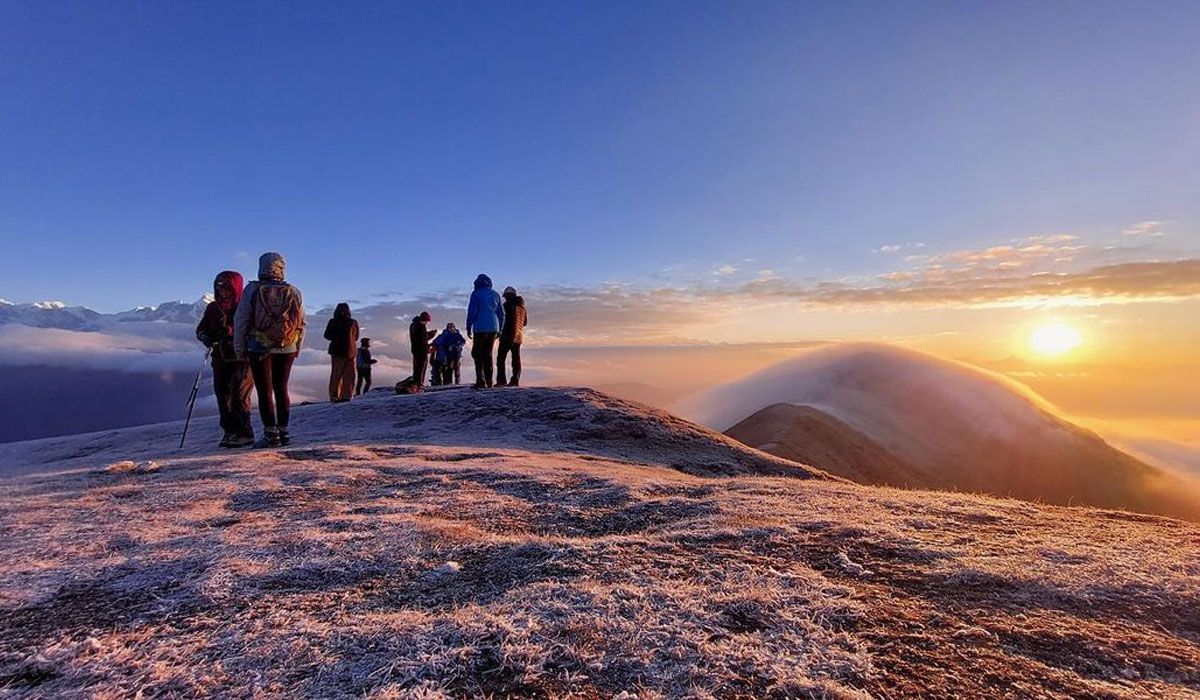
The trek begins in Lower Solukhumbu, reached by road from Kathmandu. The route passes through small villages, forests, monasteries, and open ridges before reaching Pikey Peak at 4,065 meters.
On a clear morning, the summit gives you a wide Himalayan panorama. Everest is visible in the distance rather than directly in front of you, but that is part of the appeal. You are looking across a broad range of mountains from a quieter trail, without the flight logistics and busy main route of Everest Base Camp.
The road approach is the main trade-off. It saves the cost of a Lukla flight, but the journey can be long and tiring. Shared road transport makes the budget work, but private jeeps can raise the total quickly.
Pikey Peak can fit within a $500 budget, but it works best when you keep transport practical, avoid unnecessary private transfers, and travel with at least one other trekker so the per-person guide price is lower.
Solo travelers should expect less room in the budget, particularly if they prefer private road transport.
Choose Pikey Peak when Everest views are important to you, but you would rather trade the Lukla flight and busier trails for a quieter road-based route.
5. Helambu Trek: Lower Altitude With Simpler Access
Helambu is a good reminder that a trek does not need to end at a famous base camp or a very high summit viewpoint to feel worthwhile.
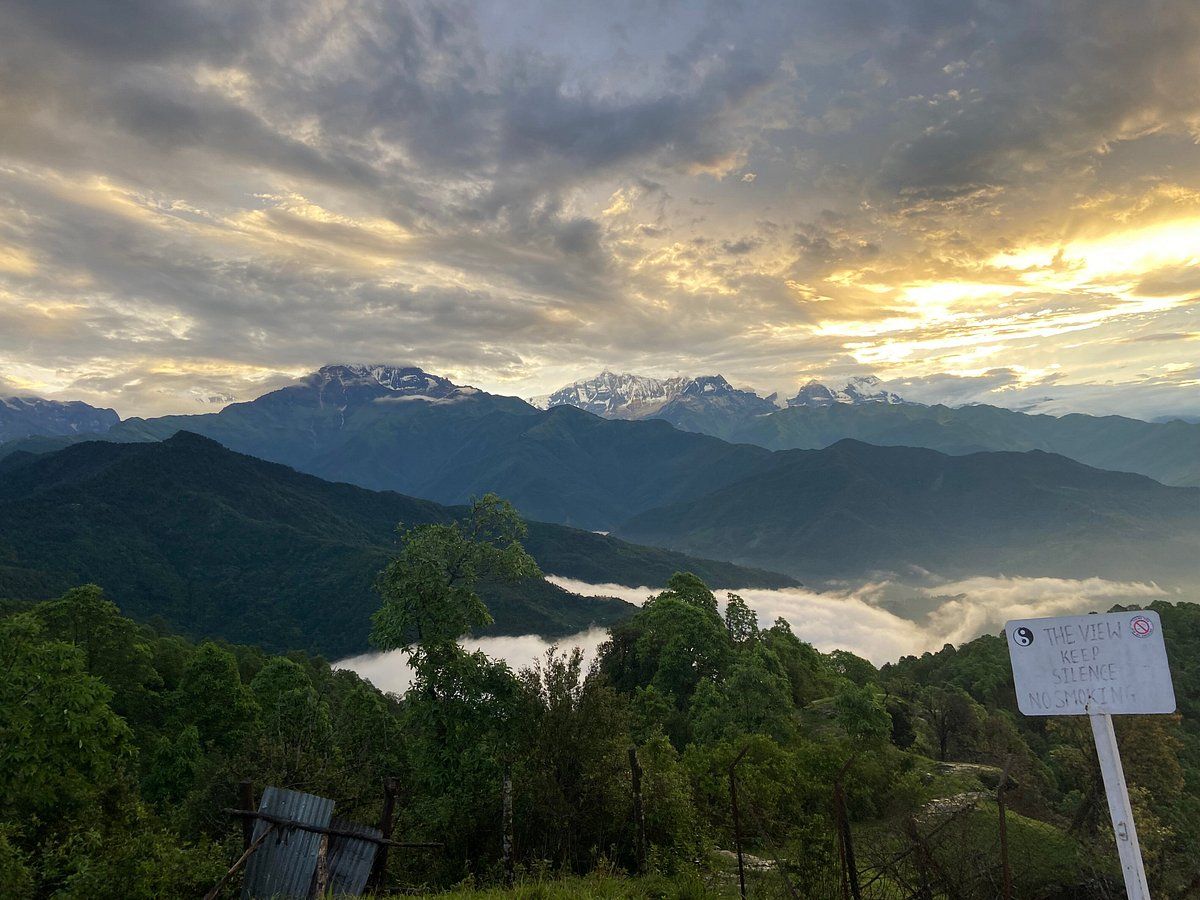
The Helambu circuit begins close to Kathmandu and moves through forest, hillside settlements, and villages before reaching the Tharepati area at around 3,650 meters. From there, the route continues through places such as Melamchigaun and Tarkeghyang before returning towards the roadhead.
Compared with ABC, Langtang, or Pikey Peak, Helambu is less about reaching one dramatic high point. The value of the route is in the days between: forest walking, quieter trails, village stays, and a gentler build-up in altitude.
Its easier access gives Helambu more room within a $500 budget. There is no separate journey to Pokhara and no domestic flight to plan. With basic lodge rooms, practical daily spending, and a simple road-based itinerary, it is one of the more manageable options for travelers trying to stay within this range.
Helambu often suits travellers who prefer simpler logistics, quieter village trails, and less pressure to reach a major high-altitude objective.
When Does a $500 Trek Budget Actually Work?
A $500 trekking budget works when the route and the travel style match each other.
It is not about cutting corners on permits, guide support, meals, or safety. Those are not the places to save carelessly. The budget works when you keep the overall plan simple and do not build it around private transport, extra nights, or added comforts from the beginning.
Private jeeps, porters, private rooms, extra rest days, frequent hot showers, Wi-Fi, charging, snacks, alcohol, and bottled drinks can all raise the total. None of those choices are wrong. A porter may make a long trek more comfortable, a private jeep may save time, and an extra rest day may be the right decision for your body.
The important thing is to treat those choices as part of your budget before the trek starts, rather than as unexpected costs on the trail.
Which Trek Is Right for You?
There is no single best trek in this list. The right choice depends on what matters most to you: a base-camp finish, mountain views, quieter trails, lower altitude, or a shorter overall trip.
Choose Annapurna Base Camp if reaching a real Himalayan base camp is your main priority and you are comfortable with a tighter budget.
Choose Langtang if you want the journey through villages and a mountain valley to matter as much as the final viewpoint.
Choose Mardi Himal if you have limited time and want close Annapurna views without committing to a longer trek.
Choose Pikey Peak if Everest views matter to you, but you prefer a road-based route over Lukla flight logistics.
Choose Helambu if you want simpler access from Kathmandu, lower altitude than the other routes in this guide, and a quieter village-focused experience.
The $500 figure can help narrow the options, but it should not make the decision on its own. Think first about your available time, comfort with altitude and long walking days, and what you want the trek to feel like.
Once that is clear, the budget becomes much easier to plan around.
For a trip-specific breakdown based on your group size, dates, porter preference, and travel style, use the Nepwise Trek Planner.

Nima Tamang
Nima works on the operational and digital execution side of Nepwise Adventures, with hands-on involvement in how treks are planned, communicated, and delivered.
His role bridges on-ground trekking realities with platform workflows, ensuring that trip information, coordination, and traveler communication accurately reflect real trekking conditions in Nepal.