Broad Peak vs Everest: What Makes Pakistan's 12th-Highest Peak So Dangerous?

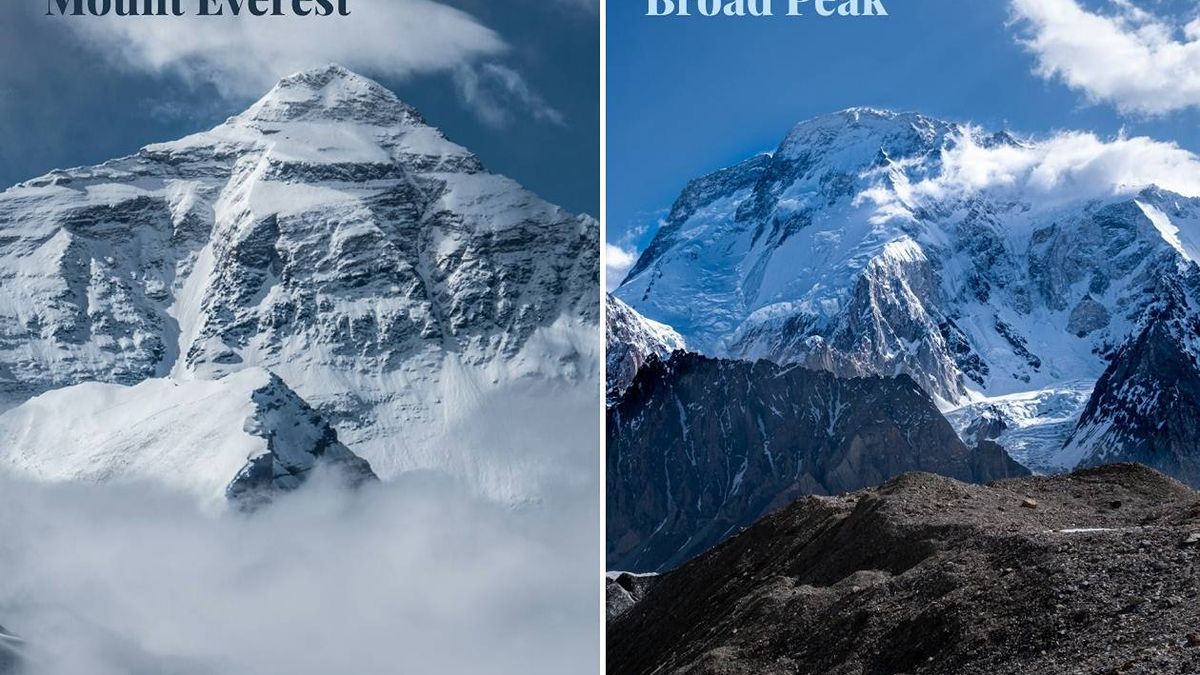
Broad Peak vs Everest: Discover why Pakistan's Broad Peak is considered one of the world's most dangerous 8,000-meter mountains despite being nearly 800 meters shorter than Mount Everest.
When people think of extreme mountaineering, Mount Everest is usually the first mountain that comes to mind. As the highest peak on Earth at 8,848.86 meters (29,031.7 ft), it attracts hundreds of climbers every year and dominates headlines during the spring climbing season.
Yet among experienced high-altitude mountaineers, another mountain often earns even greater respect: Broad Peak.
Standing at 8,051 meters (26,414 ft) in Pakistan's Karakoram range, Broad Peak is the world's 12th-highest mountain. Although it is nearly 800 meters shorter than Everest, many climbers consider it a far more committing expedition. Its remote location, rapidly changing weather, long summit ridge, and limited support leave little room for mistakes.
So why does Broad Peak have such a formidable reputation? Here's what makes it one of the most dangerous mountains in the world.
Broad Peak vs Everest: Quick Comparison
| Feature | Mount Everest | Broad Peak |
|---|---|---|
| Height | 8,848.86 m (29,031.7 ft) | 8,051 m (26,414 ft) |
| Mountain Range | Himalayas | Karakoram |
| Base Camp Access | Established trekking route | Remote Baltoro Glacier approach |
| Summit Route | Clearly defined final ascent | Long exposed summit ridge |
| Weather Windows | More predictable | Short and highly variable |
| Commercial Support | Extensive | Limited |
| Route Finding | Mostly established | Often requires independent judgment |
| Rescue Access | Comparatively better | More remote and complex |
1. The Karakoram Is a Different Kind of Mountain Range
One of the biggest differences between Broad Peak and Everest is where they are located.
Everest rises in the Himalayas on the border of Nepal and China. Over decades, its southern route has developed into one of the most organized high-altitude climbing environments in the world. Reaching Everest Base Camp involves a well-established trekking route with villages, tea houses, communication facilities, and relatively straightforward logistics.
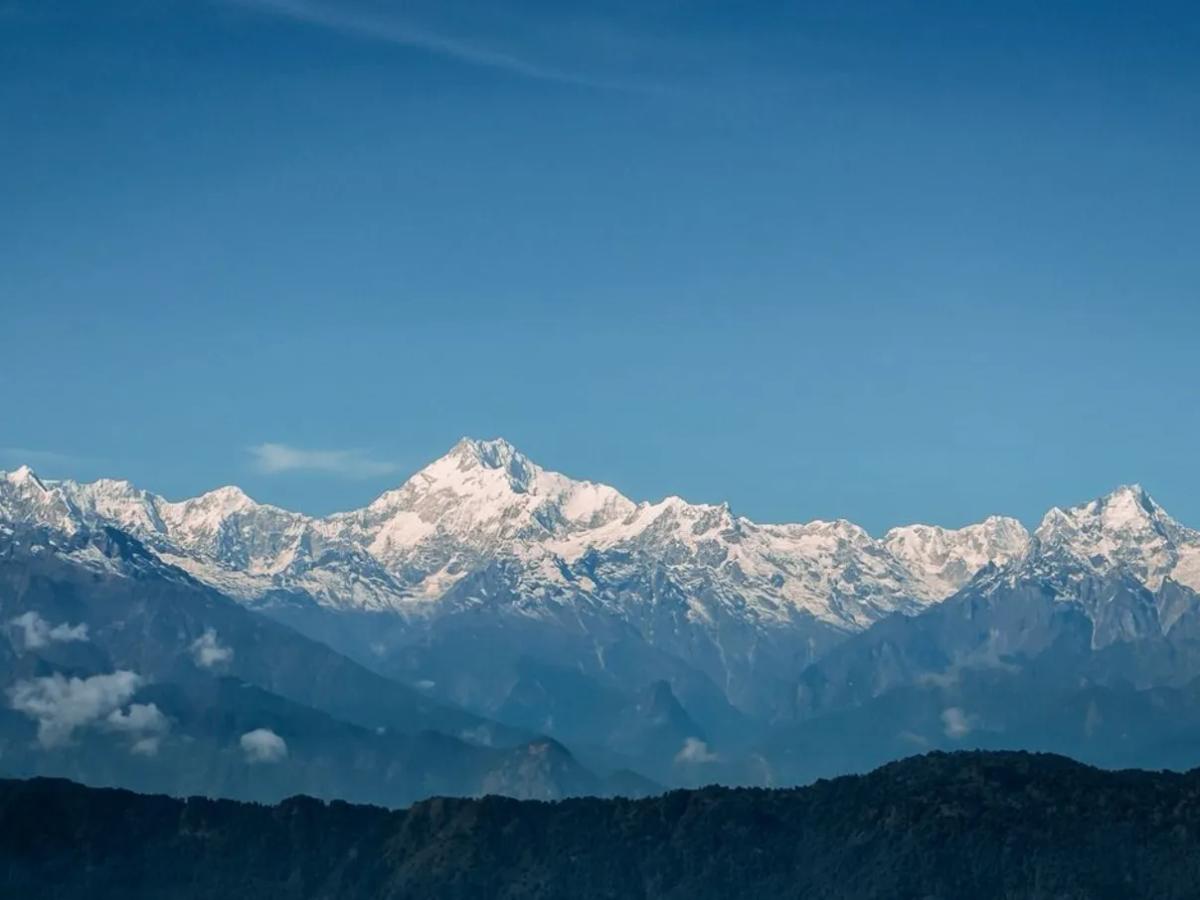
Himalayan Range in Nepal
Broad Peak sits deep inside Pakistan's Karakoram, about 8 kilometers from K2.
Simply reaching Base Camp is a major expedition. Climbers must spend several days trekking across the Baltoro Glacier, one of the longest glaciers outside the polar regions. There are no permanent lodges along the route, and the surrounding terrain is far more isolated than Everest.
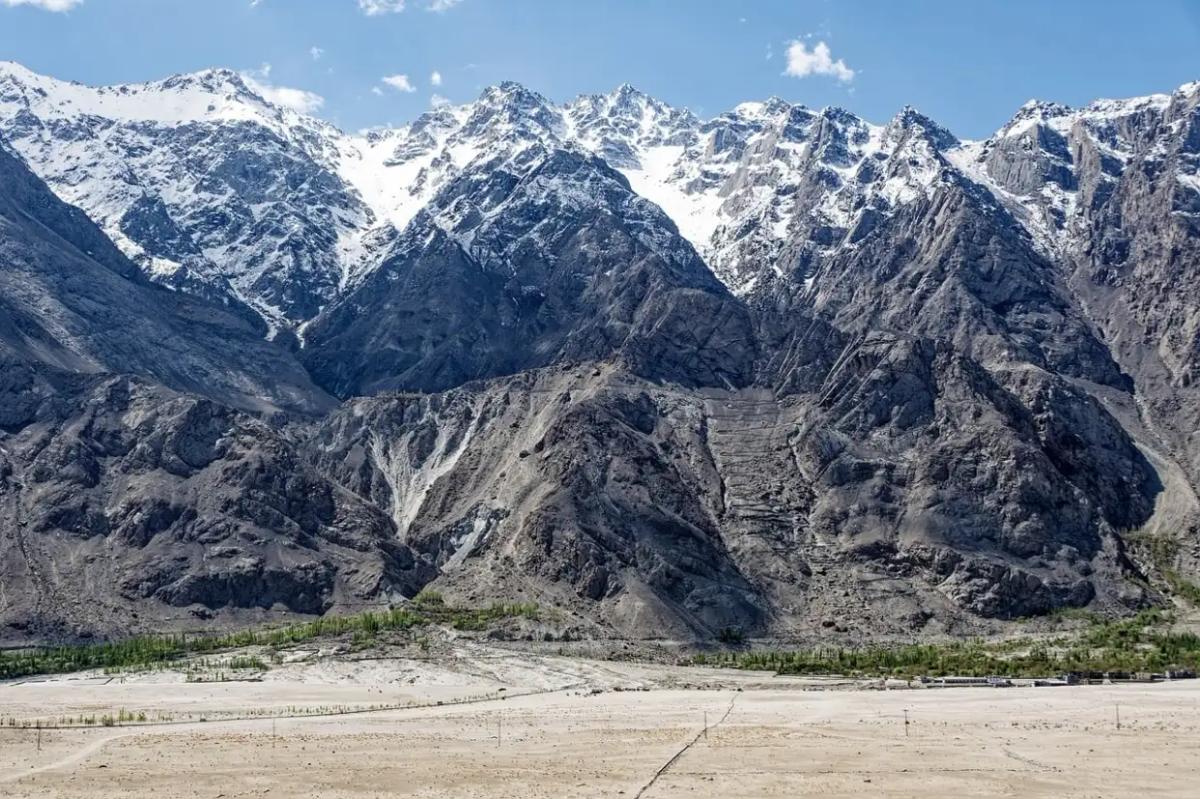
Karakoram Range in Pakistan
This remoteness affects every part of the climb. If equipment fails, someone becomes injured, or weather suddenly changes, assistance is much harder to obtain. Rescue operations depend heavily on weather conditions and military helicopter availability, and evacuation can take much longer than on Everest.
The climb begins with a greater sense of commitment because once you're on Broad Peak, turning back isn't always quick or simple.
2. Broad Peak's Weather Is Less Predictable
Both Everest and Broad Peak experience severe weather, but the Karakoram has a reputation for being especially unpredictable.
During Everest's main climbing season in May, weather forecasts often provide several days of advance notice for stable summit windows. While conditions can still change, expeditions generally have enough information to plan their summit attempts.
Broad Peak offers fewer such opportunities.
Storm systems can develop rapidly, bringing strong winds, heavy snowfall, and near-zero visibility within hours. High camps have occasionally been damaged or destroyed by sudden storms, forcing climbers to descend before reaching the summit.
Because good weather windows are shorter and less predictable, expeditions often have fewer chances to make a summit push. This can place additional pressure on climbers to continue even when conditions begin to deteriorate.
Unlike Everest, where climbers may have multiple summit opportunities during a season, Broad Peak often gives only one realistic chance.
3. The Long Summit Ridge Is a Serious Trap
Broad Peak's greatest challenge comes near the very end of the climb.
Unlike Everest, reaching the highest point on Broad Peak isn't as straightforward as it appears.
The mountain gets its name from its wide summit ridge, which stretches for roughly 1.5 kilometers. After climbing thousands of meters, many climbers reach what is known as the Fore Summit and naturally assume they have reached the top.
They haven't.
The True Summit still lies across a narrow, exposed ridge covered with snow and ice. Every additional step takes place above 8,000 meters, inside the Death Zone, where the human body can no longer acclimatize and begins to deteriorate.
This creates both a physical and psychological challenge.
After climbing for many exhausting hours, climbers must decide whether they still have enough strength, oxygen, daylight, and stable weather to continue across the ridge. Turning back means abandoning the summit after coming so far. Continuing may push them beyond their physical limits.
Many experienced mountaineers consider this final traverse to be one of Broad Peak's defining hazards.
4. Route Finding Requires More Independent Decision-Making
Everest's South Col route has become highly standardized over the years.
Commercial expeditions establish fixed ropes along nearly the entire route, camps are prepared well in advance, and climbers usually follow a clearly defined path created by earlier teams.
Broad Peak is different.
Although fixed ropes are commonly installed on key sections, coverage is often less extensive and may vary from season to season. Fresh snowfall can quickly erase previous tracks, forcing climbers to identify the safest route themselves.
This means navigation becomes part of the challenge.
Teams may need to break trail through deep snow, assess changing conditions, or even install additional protection where necessary. Poor decisions about route choice can significantly increase exposure to avalanches, unstable snow, or dangerous terrain.
Broad Peak demands more self-reliance than many climbers expect.
5. Less Commercial Support Means Greater Personal Responsibility
Another major difference between these mountains is the level of support available during the climb.
Everest has become a highly commercialized expedition. Large Sherpa teams transport equipment, establish camps, fix ropes, and carry supplies to higher elevations well before most clients begin their summit attempt.
Broad Peak has far less infrastructure.
Expeditions are generally smaller, there are fewer high-altitude support staff, and climbers often carry more of their own equipment between camps. While experienced Pakistani high-altitude porters and expedition teams provide valuable assistance, the scale of logistical support is nowhere near what climbers typically find on Everest.
As a result, success on Broad Peak depends much more on personal endurance, technical judgment, and decision-making.
There are simply fewer people available to solve problems if something goes wrong.
6. Objective Hazards Never Go Away
Every high-altitude mountain presents objective hazards, meaning dangers that exist regardless of a climber's skill.
Broad Peak has several.
The route between Camp 2 and Camp 3 passes beneath slopes that are susceptible to slab avalanches, particularly after fresh snowfall or strong winds. Snow conditions can change quickly, increasing the likelihood of unstable layers releasing.
Rockfall is another concern. As temperatures rise during the day, loose rocks and melting ice can fall onto sections of the climbing route, especially at lower elevations.
Crevasses, hidden beneath snow bridges, also require constant attention throughout parts of the expedition.
Unlike physical fitness or technical ability, these hazards cannot be completely controlled. Climbers can only reduce their exposure by choosing the right timing, moving efficiently, and making conservative decisions.
7. The Death Zone Lasts Longer Than Many Climbers Expect
Both Everest and Broad Peak require climbers to spend time above 8,000 meters.
However, Broad Peak often demands more prolonged movement at these extreme altitudes.
Because the True Summit lies beyond the Fore Summit, climbers remain in the Death Zone for several additional hours while crossing the exposed ridge and then returning along the same route.
At these elevations, even simple movements require enormous effort. Decision-making slows, fatigue increases, and the risk of altitude-related illnesses grows with every passing hour.
Many accidents on 8,000-meter peaks occur during the descent, when exhausted climbers must still safely retrace their route after reaching the summit.
Broad Peak's long summit ridge makes this challenge even more demanding.
Final Thoughts
Mount Everest will always be the world's most famous mountain because of its height and history. But height alone does not determine how difficult or dangerous a climb will be.
Broad Peak presents a different kind of challenge. Its remote location, unpredictable Karakoram weather, demanding route finding, limited support infrastructure, objective hazards, and deceptively long summit ridge combine to create a mountain that requires patience, sound judgment, and self-reliance.
It may rank as the world's 12th-highest peak, but Broad Peak has earned a reputation far beyond its position on the altitude list.
For experienced mountaineers, it serves as a reminder that in high-altitude climbing, success is not measured only by reaching the summit. It is measured by making good decisions, respecting the mountain, and returning safely.

Jeevan Lama
With 15+ years of direct experience in trekking operations and field coordination, he brings deep practical knowledge of Nepal’s trekking routes, safety protocols, and logistics. At Nepwise Adventures, he oversees trek operations, guide coordination, and on-ground execution, ensuring that every trek follows responsible practices and meets professional safety standards.