Who Was Nirmal Purja (Nims Dai)? His Story, Records, and Mountaineering Legacy

From the Gurkhas to Project Possible, K2 and record-breaking climbs, Nirmal Purja’s story is one of ambition, Nepali teamwork, controversy and a lasting impact on modern mountaineering.
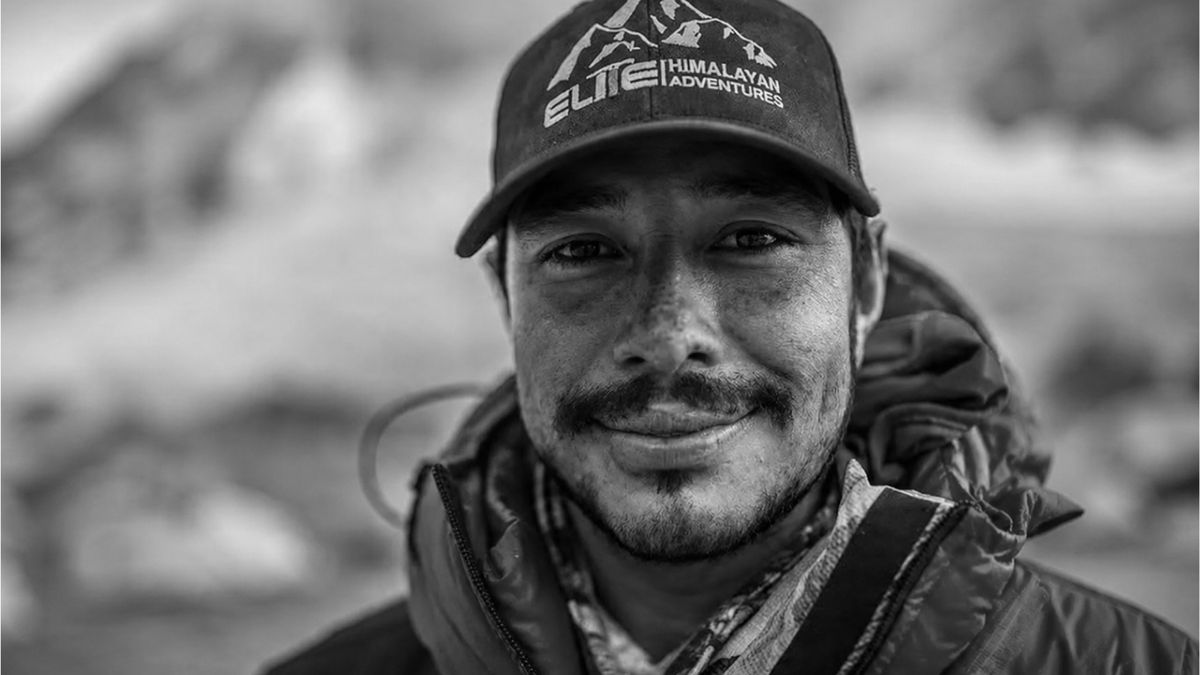
Nirmal Purja, widely known as Nims Dai, was one of the most recognizable Nepali mountaineers of his generation.
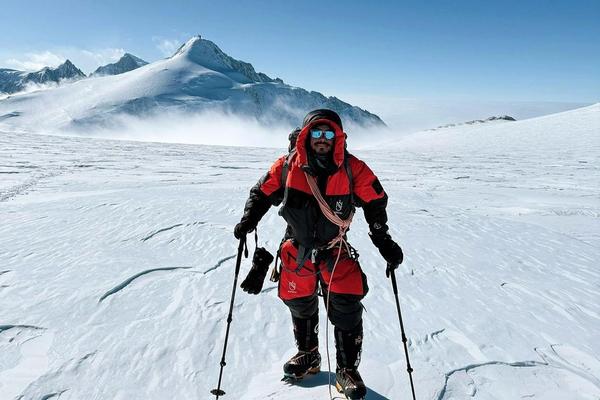
A former Gurkha and member of the UK’s Special Boat Service, he became internationally known through Project Possible, his 2019 challenge to climb all 14 mountains above 8,000 meters within seven months. He completed the sequence in just 189 days.
His career later included the historic first winter ascent of K2, numerous high-altitude speed records, and a successful attempt to climb all 14 true summits without supplementary oxygen. His journey was also documented in the Netflix film 14 Peaks: Nothing Is Impossible.
On August 1, 2026, his company Elite Exped confirmed that Purja had died following an avalanche on Broad Peak in Pakistan. He was 43.
His death brought an extraordinary mountaineering career to an unexpected end. But understanding why Nims Dai mattered requires looking beyond his final expedition to the unusual path that took him from the British military to the world's highest mountains.
Early Life and Military Career
Nirmal Purja was born in Dana, Myagdi, near Nepal’s Dhaulagiri region, and spent much of his childhood in Chitwan. Growing up, his ambition was not to become a professional mountaineer but to follow members of his family into the Gurkhas.
He joined the Brigade of Gurkhas in 2003. Six years later, he was selected for the UK’s Special Boat Service, becoming the first Gurkha to join the elite unit.
Purja eventually completed a 16-year military career, including ten years with the UK Special Forces. The work demanded endurance, teamwork, planning and the ability to make decisions under pressure, qualities that later became closely associated with his approach to high-altitude expeditions.
Mountaineering, however, entered his life relatively late.
How Nims Dai Discovered Mountaineering
Purja’s interest in climbing began during military leave in December 2012, when he joined a trek to Everest Base Camp.
After reaching base camp, he persuaded his guide to teach him the basics of climbing. Soon afterwards, he climbed Lobuche East at 6,119 meters, his first Himalayan peak.
What began as curiosity developed quickly. Within several years, climbing was no longer something he fitted around his military career. It had become the direction he wanted his life to take.
That eventually forced him to make a much larger decision.
Leaving the Military for Project Possible
By 2019, Purja had spent 16 years in the British military. Walking away meant leaving behind a secure career and the financial stability that came with it.
His mountaineering ambitions, however, had grown too large to pursue alongside military service.
He left to focus on an idea that many people considered unrealistic: climbing all 14 of the world’s mountains above 8,000 metres within seven months.
The challenge became known as Project Possible 14/7.
The risk was not purely physical. Purja later spoke about beginning the project without all the funding he needed and struggling to convince sponsors that such an ambitious schedule could actually be completed.
At that point, there was no Netflix documentary and no internationally recognized Nims Dai brand. He was a former soldier trying to prove that an idea many doubted could be done.
What Was Project Possible?
Project Possible was Purja’s attempt to climb all 14 eight-thousanders within seven months.
Before his attempt, completing all 14 was generally treated as a long-term mountaineering objective requiring many years. Purja believed the timeline could be dramatically shortened through careful planning, maintained acclimatization, fast movement between mountains and experienced climbing teams.
He divided the challenge into three phases:
| Phase | Mountains | Period |
|---|---|---|
| Nepal | Annapurna, Dhaulagiri, Kangchenjunga, Everest, Lhotse and Makalu | April to May 2019 |
| Pakistan | Nanga Parbat, Gasherbrum I, Gasherbrum II, K2 and Broad Peak | July 2019 |
| Nepal and Tibet | Cho Oyu, Manaslu and Shishapangma | September to October 2019 |
Purja began on Annapurna on 23 April and completed the final mountain, Shishapangma, on 29 October 2019.
The entire sequence took 189 days, or six months and six days.
It was a world record at the time, although the speed record for completing the 14 eight-thousanders was later surpassed in 2023.
How Did He Complete It So Quickly?
Project Possible depended on more than Purja’s physical ability.
He maintained his high-altitude acclimatization between expeditions and moved rapidly between Nepal, Pakistan and Tibet. Supplementary oxygen was used, while helicopters and other aircraft helped with some transfers.
His teams used established expedition infrastructure where available, including fixed ropes. On several mountains, they also broke trail and fixed ropes themselves in difficult conditions.
This made Project Possible as much an exercise in logistics as endurance. Permits, weather windows, transport, equipment and the movement of climbing teams all had to fit into one connected schedule.
The Nepali Climbers Behind the Project
Although Purja was the only person to complete all 14 mountains during Project Possible, he did not achieve the project alone.
Different groups of experienced Nepali climbers worked alongside him throughout the three phases. They helped fix ropes, break trails, carry equipment and keep the expeditions moving at the pace the project demanded.
Mingma Gyabu “David” Sherpa, Geljen Sherpa, Gesman Tamang and other climbers played important roles at different stages. Mingma David also became the youngest person at the time to complete all 14 eight-thousanders.
Recognizing Nims Dai’s achievement, therefore, does not require treating Project Possible as a solo effort. Teamwork was fundamental to how it succeeded.
Nirmal Purja’s Major Records and Achievements
Project Possible remains his best-known achievement, but his mountaineering career continued after 2019.
| Achievement | Year | Result |
|---|---|---|
| Project Possible | 2019 | Completed the 14-peak sequence in six months and six days |
| Five highest 8,000-meter mountains | 2019 | Completed Kangchenjunga, Everest, Lhotse, Makalu and K2 within 70 days |
| First winter ascent of K2 | 2021 | One of ten Nepali climbers who reached the summit together |
| Everest and Lhotse without supplementary oxygen | 2022 | Completed both in 25 hours and one minute |
| Three highest mountains without supplementary oxygen | 2022 | Completed Kangchenjunga, Everest and K2 in 75 days, 21 hours and 45 minutes |
| Pakistan’s five 8,000ers without supplementary oxygen | 2023 | Completed the five mountains in 26 days |
| All 14 true summits without supplementary oxygen | 2024 | Completed the sequence in two years and 150 days |
| All 14 eight-thousanders twice | 2024 | Became the first person recognised for completing all 14 twice |
Guinness World Records confirms several of these later achievements, including the 25-hour-and-one-minute Everest–Lhotse record, his 75-day, 21-hour and 45-minute sequence across Kangchenjunga, Everest and K2. It also records the Pakistan Five in 26 days and his completion of the 14 true summits without supplementary oxygen in two years and 150 days.
These records represented different styles of achievement. Some measured speed between mountains, while others focused on repeated high-altitude performance or climbing without supplementary oxygen.
The First Winter Ascent of K2
One of the defining moments of Purja’s career came in January 2021, when he joined nine other Nepali climbers in completing the first winter ascent of K2.
Until then, K2 was the only one of the 14 eight-thousanders that had never been climbed in winter.
Several Nepali teams were attempting the mountain that season. Rather than continuing separately during the final push, ten climbers joined forces.
On 16 January 2021, they reached the summit. Just below the top, the climbers waited for one another and completed the final steps together while singing Nepal’s national anthem.
The ten climbers were Nirmal Purja, Mingma Gyalje Sherpa, Gelje Sherpa, Mingma David Sherpa, Mingma Tenzi Sherpa, Dawa Temba Sherpa, Pem Chhiri Sherpa, Kilu Pemba Sherpa, Dawa Tenjing Sherpa and Sona Sherpa.
Purja completed the summit climb without supplementary oxygen.
The winter ascent of K2 should not be treated simply as another individual Nims Dai record. Its wider significance came from ten Nepali climbers choosing to finish one of mountaineering’s last major winter challenges together.
How 14 Peaks Changed His Public Recognition
Project Possible had already made Purja well known within mountaineering, but his audience expanded dramatically after 14 Peaks: Nothing Is Impossible was released on Netflix in 2021.
The documentary followed the seven-month project through expedition footage, funding difficulties, family pressures and the challenge of moving rapidly between the world’s highest mountains.
It introduced Nims Dai to millions of people who had never closely followed Himalayan mountaineering. At the same time, it showed experienced Nepali climbers working alongside him rather than presenting them only as background support.
Purja became more than a record-holder. He developed into an expedition leader, entrepreneur and internationally recognizable mountaineering personality.
Why Nims Dai Mattered for Nepali Mountaineers
Nepali climbers had been central to Himalayan mountaineering long before Project Possible.
For generations, they had fixed ropes, carried equipment, established camps, guided clients and taken major risks at altitude. Yet international expedition stories often focused more heavily on foreign climbers, even when Nepali teams had completed much of the work behind their success.
Purja openly challenged that pattern.
He presented himself and his teammates as expedition leaders, planners and record-holding athletes rather than anonymous support staff. Project Possible and the K2 winter ascent both placed Nepali climbers visibly at the center of their own achievements.
That does not mean Purja created international recognition for Nepali mountaineers by himself. Nepal already had generations of exceptional climbers, from Tenzing Norgay to Ang Rita Sherpa, Apa Sherpa and many others.
His contribution was different. Through records, documentaries, social media and his own strong public profile, he became part of the evolution of modern Nepali mountaineering, helping bring an existing reality to a much larger global audience.
How Should Nims Dai’s Records Be Understood?
The methods that allowed Project Possible to move so quickly also placed it in a different category from traditional alpine-style mountaineering.
Traditional alpinists may place greater emphasis on limited support, new routes and climbing without supplementary oxygen. Purja’s project focused instead on speed, endurance, teamwork and the logistics required to connect 14 major expeditions within one season.
That distinction matters.
Project Possible was never an unsupported alpine-style attempt. It was a speed and expedition-logistics challenge, and judging it on those terms gives a clearer understanding of what Purja and his teams actually accomplished.
His approach attracted both admiration and criticism throughout his career. That debate did not erase the physical difficulty of his climbs, but it did show that mountaineering records can represent very different styles and values.
Why Are There Different Record Times for Project Possible?
Readers researching Nims Dai may encounter different figures for his completion of the 14 eight-thousanders.
The famous six months and six days refer to his original 2019 Project Possible sequence.
At the time, the points reached on Dhaulagiri and Manaslu were accepted under common expedition practice. Later mapping and geographical analysis created a stricter distinction between some previously accepted summit points and the geographically true summits.
Purja subsequently returned to Dhaulagiri and Manaslu in 2021. His true summit completion with supplementary oxygen was therefore recognized on a different timeline.
He later completed all 14 true summits without supplementary oxygen between 7 May 2022 and 4 October 2024, a period of two years and 150 days recognized by Guinness World Records.
The distinction does not remove Project Possible from mountaineering history. It reflects how summit verification became more precise.
Nims Dai’s Final Expedition on Broad Peak
Broad Peak was already part of Purja’s mountaineering history. He had climbed the 8,000-meter mountain during the Pakistan phase of Project Possible in 2019.
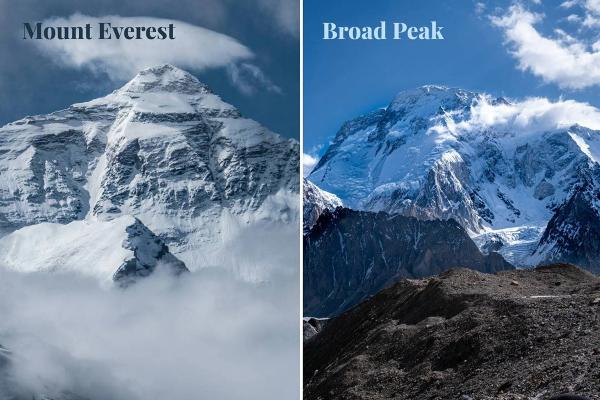
In July 2026, he returned to Broad Peak as the leader of another expedition. For readers unfamiliar with the mountain, we have also explained how Broad Peak differs from Everest and what makes it particularly dangerous.
On Thursday, the group lost contact with base camp after an avalanche struck the team on the 8,051-meter mountain in Pakistan’s Gilgit-Baltistan region. Search operations involving local authorities, experienced climbers, drones and military helicopters followed.
On August 1, Elite Exped confirmed that Nirmal Purja had died following the avalanche. The company also confirmed that other members of the expedition had not survived. Purja was 43 years old.
Officials said the locations of Purja and the remaining climbers had been identified, although difficult terrain continued to complicate recovery efforts at the time the deaths were confirmed.
Broad Peak became the final mountain of a climbing career that had begun almost unexpectedly with a trek to Everest Base Camp fourteen years earlier.
Frequently Asked Questions
Why Was Nirmal Purja Called Nims Dai?
“Nims” was a shortened form of Nirmal. In Nepali, dai means “elder brother” and is commonly used as a respectful or friendly way of addressing an older man.
Was Nims Dai a Sherpa?
No. Nirmal Purja was from Nepal’s Magar community. Sherpa is the name of an ethnic community and should not be used as a general term for every Nepali climber or mountain guide.
Was Nirmal Purja a Gurkha?
Yes. He joined the Brigade of Gurkhas in 2003 and was later selected for the UK’s Special Boat Service.
What Is the Nims Dai Documentary Called?
The documentary is called 14 Peaks: Nothing Is Impossible. It was released on Netflix in 2021 and follows Project Possible.
How Did Nirmal Purja Die?
Nirmal Purja died following an avalanche on Broad Peak in Pakistan during an expedition in July 2026. His company, Elite Exped, officially confirmed his death on August 1, 2026.
Final Thoughts
Nirmal Purja’s place in modern mountaineering cannot be explained by one record or by the circumstances of his final expedition.
His journey connected an unexpected entry into climbing, a secure military career left behind and an ambition to move across the world’s highest mountains at a pace few had considered possible. Much of that journey was made alongside experienced Nepali climbers whose contribution was central to the achievements associated with his name.
Project Possible made Nims Dai internationally famous. The first winter ascent of K2 and his later oxygen-free records showed that his career extended well beyond that single challenge.
His climbing methods and public image also attracted genuine debate. Those discussions remain part of understanding his career, particularly around how mountaineering records are measured, which styles of climbing are valued and how expedition teams receive recognition.
Broad Peak is now the final chapter of his climbing story, but it should not become the whole story. Nims Dai’s lasting influence lies in both what he achieved on the mountains and the visibility he helped bring to Nepali high-altitude climbers as leaders, athletes and record-setters on the world stage.

Nima Tamang
Nima works on the operational and digital execution side of Nepwise Adventures, with hands-on involvement in how treks are planned, communicated, and delivered.
His role bridges on-ground trekking realities with platform workflows, ensuring that trip information, coordination, and traveler communication accurately reflect real trekking conditions in Nepal.