Accommodation in the Annapurna Region
The Annapurna region has well-established trekking villages and reliable tea house infrastructure. Accommodation along the trail is provided through local tea houses and mountain lodges, run by families who have supported trekkers for generations.
These lodges are simple, clean, and designed for trekkers who spend the day hiking. They offer a bed, warm meals, and a place to rest. While they are not luxury hotels, accommodation in the Annapurna is more widely available, compared to Everest region.
Comfort changes gradually as you move higher, but the overall trekking experience in Annapurna remains relaxed and well supported.
How accommodation works with Nepwise
With Nepwise, accommodation is arranged in advance for the group. This ensures smooth coordination, keeps the group together, and avoids delays, especially in busy villages during peak season.
All teahouse accommodation during the trek is included in the base package and managed by Nepwise. You don’t need to arrange or pay for rooms separately on the trail.
This way, it helps to reduce uncertainty around availability at higher altitudes.
What staying in Annapurna tea houses feels like
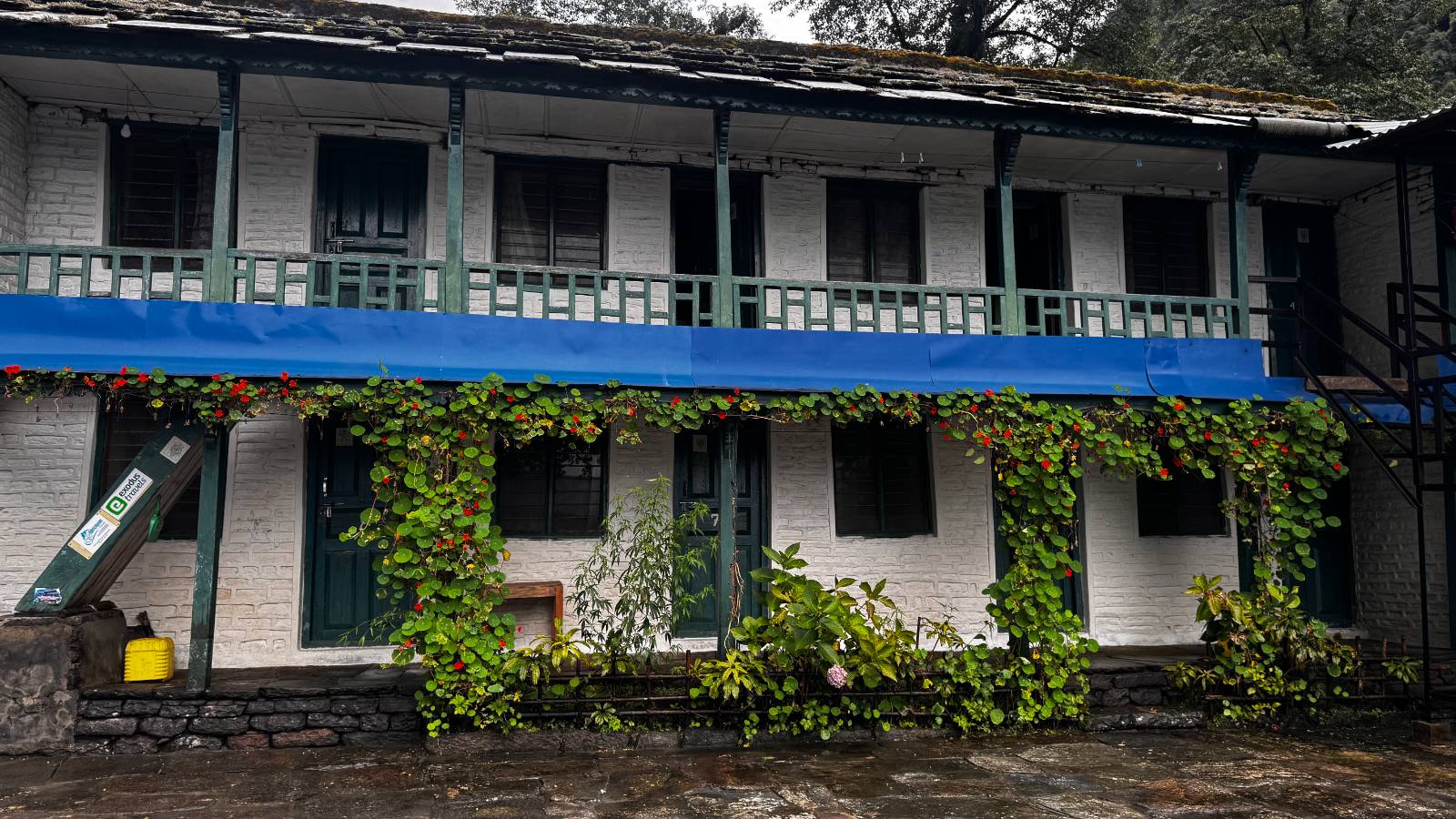
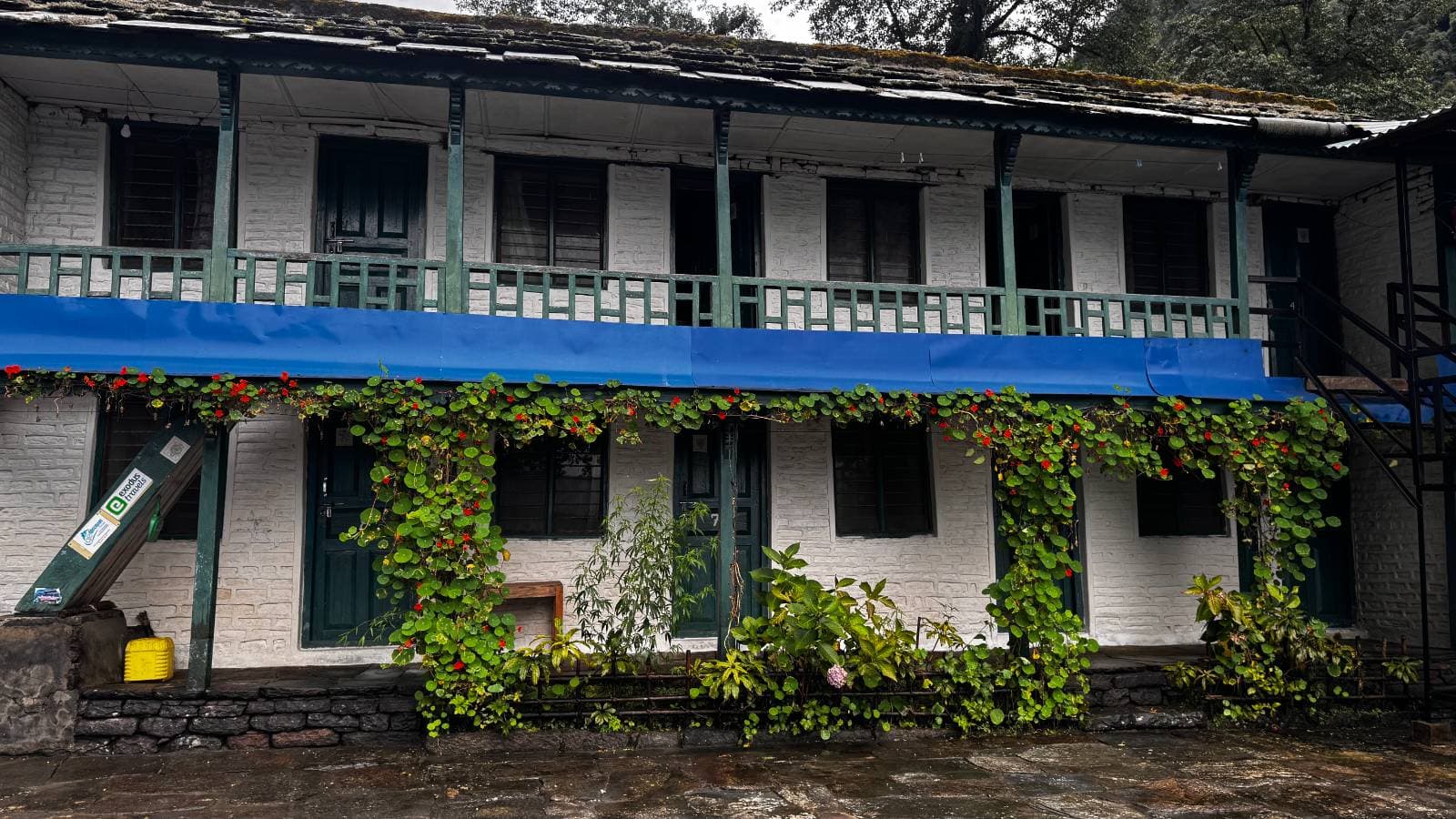
"A typical teahouse along the Annapurna trail"
In lower villages such as Ghandruk, Jhinu Danda, and Chhomrong, tea houses feel relatively comfortable. Rooms are slightly larger, bedding is better, and some lodges offer attached bathrooms. Hot showers, Wi-Fi, and charging are widely available, usually for a small extra cost.
As you move higher into villages like Bamboo, Dovan, Himalaya, and Deurali, facilities become simpler. Rooms are smaller and bathrooms are shared. Hot showers may be limited, and Wi-Fi can be slow or unavailable. Even so, lodges remain clean and warm, and dining halls are welcoming places to relax in the evening.
At Machhapuchhre Base Camp and Annapurna Base Camp, accommodation is basic and focused on rest. Rooms are simple, nights are cold, and facilities are limited due to altitude and freezing temperatures. Dining halls are heated during meal times and become the main gathering space. A good sleeping bag makes a noticeable difference here.
Rooms, sharing, and expectations
Rooms in Annapurna tea houses are usually twin-sharing, with two single beds, a mattress, pillow, and blanket. Rooms are not heated, and insulation is minimal, so nights can feel cold above Chhomrong and at higher elevations.
Room sharing is normal, especially during busy trekking months.
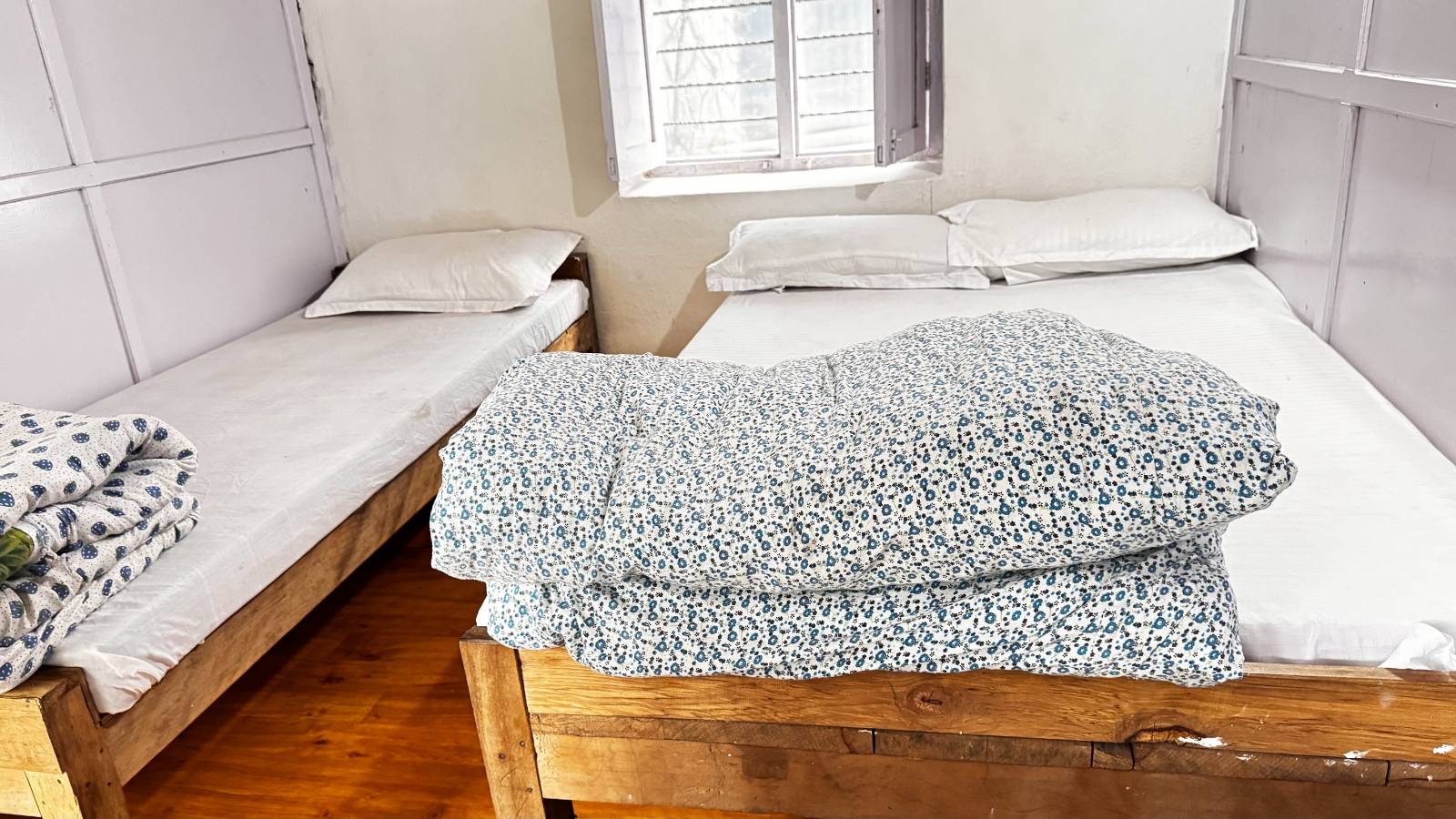
"Twin-bed room at a typical teahouse in the Annapurna region."
Private rooms may be available in lower villages, but they are never guaranteed, and availability decreases as you go higher.
If a private room is available on a given night, your guide will inform you on the spot. Nepwise does not promise upgrades that the trail cannot reliably support.
Commonly Used Tea Houses Along the Annapurna Trail
Along the Annapurna trekking routes, there are many locally run tea houses. Based on long-standing relationships and experience, Nepwise usually arranges accommodation at the following lodges along the route.
Accommodation is planned in advance. If a listed lodge is unavailable due to season, group size, or trail conditions, accommodation is arranged at a nearby lodge of a similar standard.
Village / Area | Commonly Used Tea Houses |
|---|---|
Ulleri | Super View Guest House |
Ghorepani | |
Tadapani | |
Ghandruk | |
Landruk | |
Jhinu Danda | |
Chhomrong | |
Dovan | |
Deurali | |
Machhapuchhre Base Camp (MBC) |
Meals, Wi-Fi, charging, and hot showers
Meals in the Annapurna region are warm, filling, and prepared fresh. Menus are similar across villages and usually include dal bhat, noodles, rice dishes, soups, potatoes, eggs, and simple breakfasts.
Food prices increase slowly with altitude:
Lower villages: NPR 400–600 (USD $2-$5)
Higher villages: NPR 600–700 (USD $6-$8)
We have covered meals and daily food costs in more detail in our Food & Beverages in the Annapurna Region guide.
Wi-Fi is available in many tea houses, especially in lower villages, and usually costs NPR 200–500 per day. Speed becomes weaker at higher elevations.
Charging devices typically costs NPR 200–400 per device and is done in common areas. Carrying a power bank helps reduce daily charging needs.
Hot showers are common up to Deurali and usually cost NPR 300–500. Above this point, availability depends on weather and water freezing conditions.
Toilets and hygiene
Toilets are shared and basic. Lower villages often have western-style toilets with running water. Higher up, squat toilets are more common, and water may be limited or frozen in the mornings.
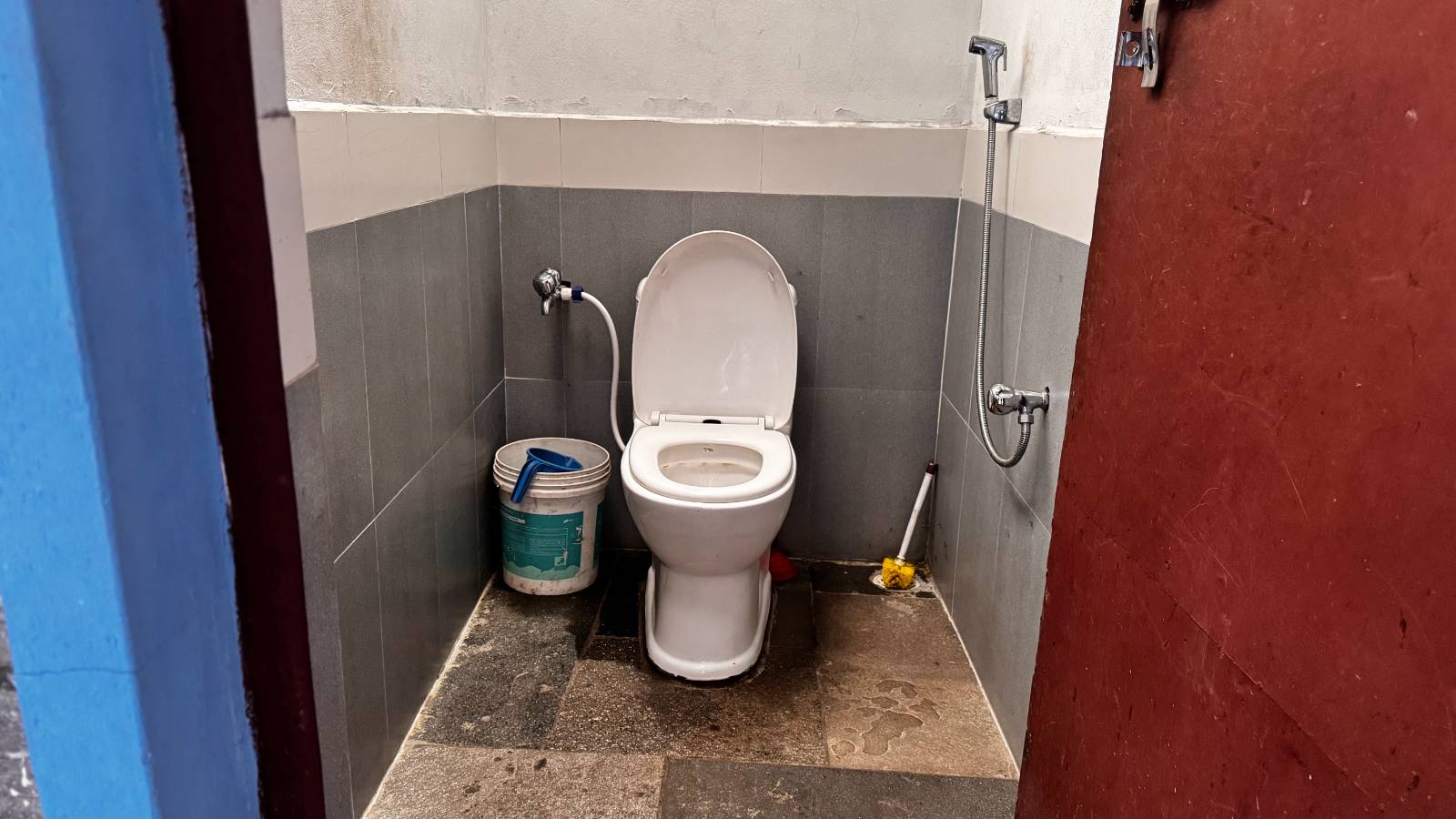
"Western-style toilet at a tea house"
Toilet paper is not provided. Trekkers should carry their own, along with hand sanitizer, wet wipes, and basic toiletries. With basic preparation, hygiene along the Annapurna trail is manageable even for first-time trekkers.
The tea house experience in Annapurna
Evenings are usually spent in the dining hall, the warmest place in the lodge. Trekkers gather around the stove with tea, rest, and prepare for the next day.
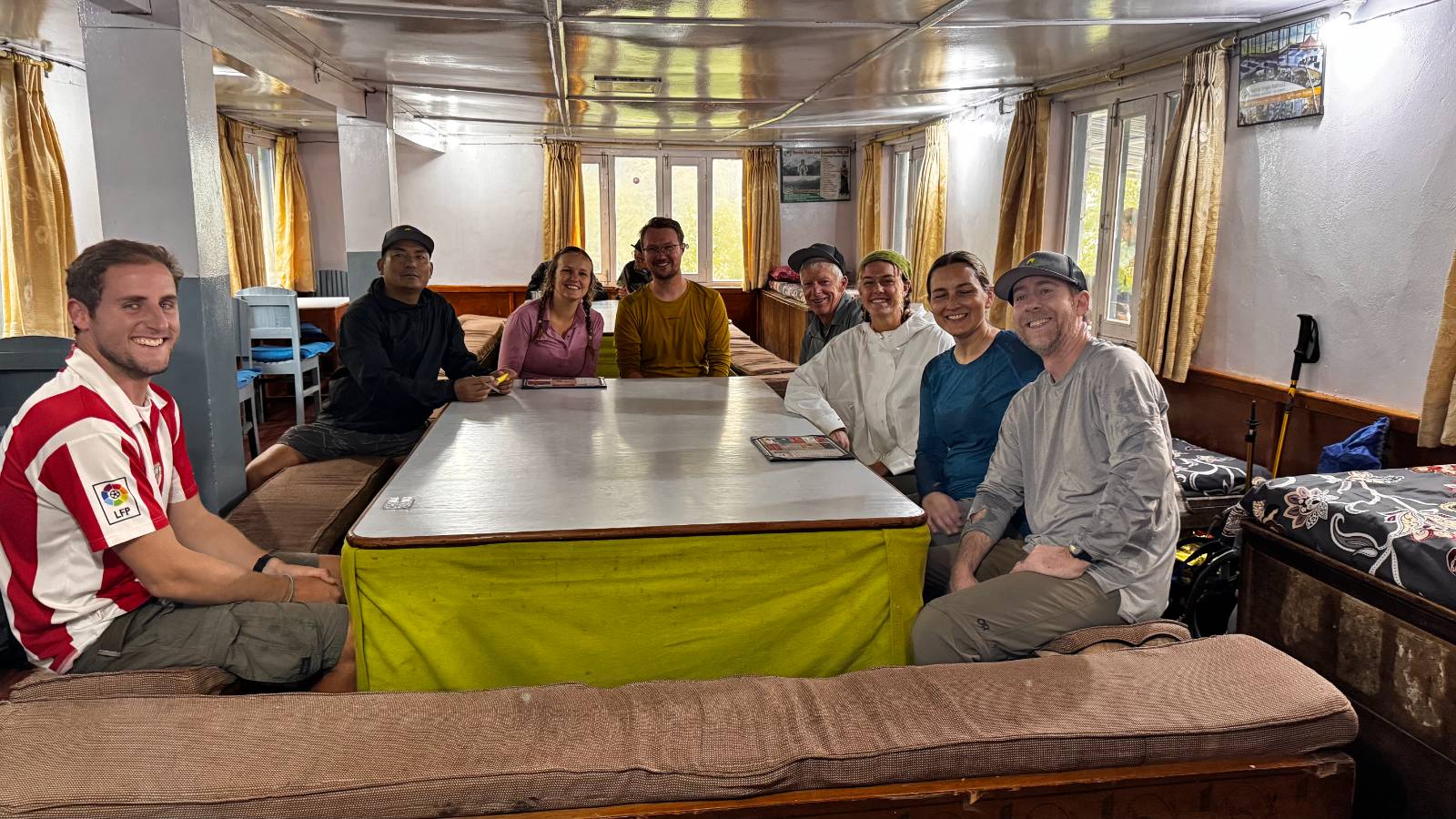
"Trekkers gathering inside a tea house"
Rooms are simple, but the steady rhythm of village life, shared meals, and mountain surroundings make staying in Annapurna tea houses a memorable part of the trek.
This isn’t about luxury. It’s about comfort, clarity, and experiencing the trail as it naturally works.
Last updated: May, 01, 2026