Food & Beverages in Annapurna Region
Food in the Annapurna region is one of the highlights of trekking here. Thanks to easier access and strong local communities, tea houses offer a wide variety of freshly prepared meals, from simple trekking food to regional specialties.
Meals are served at local tea houses along the trail, and menus are generally more varied than in higher or more remote regions. As you gain altitude, options may become slightly simpler, but food remains filling and reliable throughout the trek.
How Food Works When Trekking with Nepwise
When trekking with Nepwise, meals and drinks are not included in the base package. You can either add a meal package in advance or manage your meals independently on the trail.
We generally encourage trekkers to manage their meals on the trail, as it allows you to choose what you feel like eating each day, adjust portions based on your appetite, and stay comfortable as conditions change with altitude.
If you have added a meal package, your guide will assist you, and you can choose one meal from the menu at each mealtime.
What Meals Are Available on Annapurna Treks
Meals in the Annapurna region are prepared fresh at local tea houses along the trail. Because many villages are connected by road and have strong farming communities, food options here are generally more varied and affordable than in higher or more remote trekking regions.
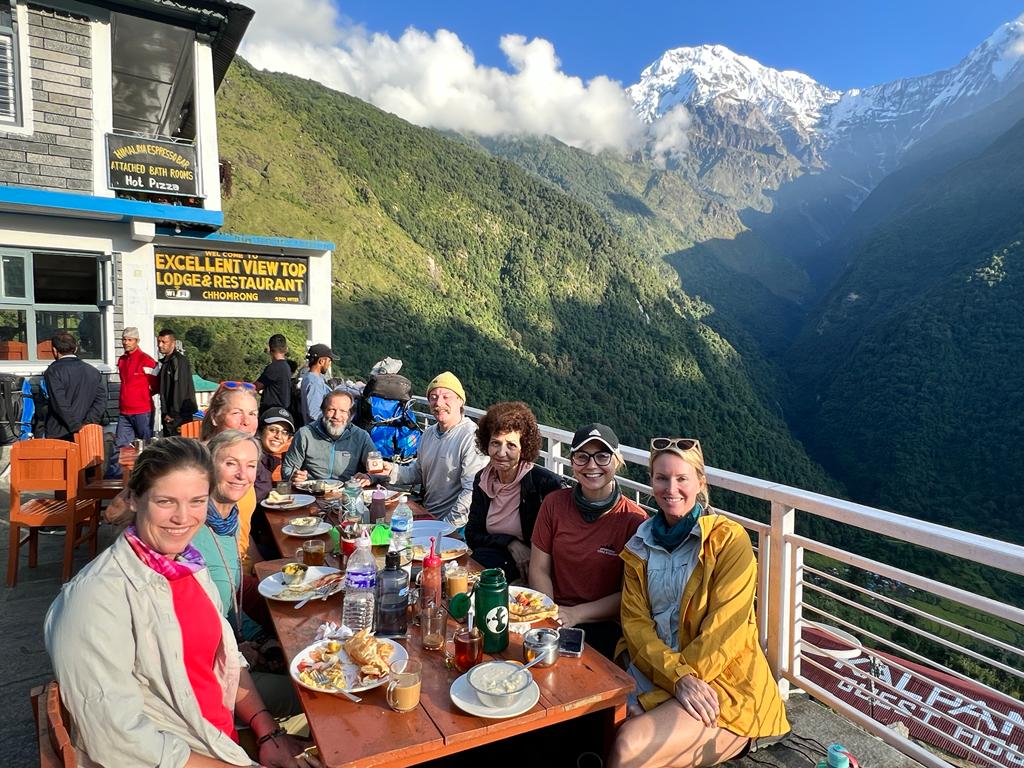
"Trekkers enjoying their meal at Chhomrong"
Menus remain fairly consistent along popular routes, though choices become slightly simpler as you gain altitude.
Breakfast Options
Breakfast is usually eaten at the tea house where you stay overnight. Common options include porridge, eggs cooked in different styles, Tibetan bread, chapati, pancakes, toast, muesli, and sometimes local bread with honey or jam.
Hot drinks such as milk tea, black tea, coffee, and hot lemon are widely available and are a regular part of the morning routine.
Lunch and Dinner Meals
Lunch and dinner menus are similar across the Annapurna region and are designed to provide enough energy for long walking days.
Typical meals include dal bhat (rice, lentils, vegetables, and pickles), fried rice or noodles, pasta and spaghetti, soups, vegetable curries, and momos in lower villages. Dal bhat is a popular choice because it is filling and often comes with free refills.
Thanks to easier supply access, Annapurna tea houses can sometimes offer a wider range of vegetables and dishes compared to higher-altitude regions.
Snacks and Local Specialties
Snacks such as biscuits, chocolate bars, popcorn, instant noodles, and energy bars are available at most tea houses and shops along the trail.
Certain areas of the Annapurna region are also known for local specialties. For example, villages like Marpha are famous for apple products, including apple pie, juice, and brandy, while Manang villages often offer yak cheese and bakery-style items.
Carrying a few snacks from lower villages can help manage daily expenses.
Typical Food and Drink Costs in the Annapurna Region
Food and drink prices in the Annapurna region are generally more affordable than in the Everest region. This is mainly because many villages have road access and local farming, which keeps transportation costs lower.
Prices still increase gradually as you gain altitude, but overall daily food expenses remain reasonable throughout most Annapurna treks.
Meal Prices (Per Item)
Breakfast: NPR 400–600 (USD $2.5–5)
Lunch or Dinner: NPR 600–1000 (USD $3.5–7.5)
Dal bhat is one of the best value meals, as it is filling and often comes with free refills.
Snack Prices
Biscuits, popcorn, instant noodles: NPR 150–400 (USD $1.5–3.5)
Chocolate bars and energy snacks: NPR 300–600 (USD $2.5–5)
Snacks are widely available, especially in villages with road access. Prices rise slightly in higher or more remote sections.
Hot Drinks and Beverages
Tea or hot lemon: NPR 100–300 (USD $1–2.5)
Coffee or hot chocolate: NPR 200–400 (USD $1.5–3.5)
Soft drinks: NPR 250–500 (USD $2–4)
Hot drinks are a regular part of trekking days and are easily available throughout the region.
Daily Food Budget (What Most Trekkers Spend)
Most trekkers in the Annapurna region spend around:
NPR 3,000–4,000 per day (approximately USD $19–30)
This usually covers:
Breakfast
Lunch
Dinner
A few hot drinks and snacks
Costs are lower at the start of the trek and increase slightly at higher elevations.
Drinking Water in the Annapurna Region
Staying hydrated is important during the trek, and in the Annapurna region, access to drinking water is generally easier and more affordable compared to higher-altitude areas.
Bottled Water
Bottled water is easily available in the lower villages, but becomes less reliable as you move higher along the trail. In upper sections, availability can vary.
Typical prices (where available) are:
Lower elevation villages: NPR 100–200 (USD $0.8–1.5)
Mid elevation villages: NPR 200–300 (USD $1.5–2.5)
Higher villages: NPR 300–500 (USD $2.5–4)
As you gain altitude, bottled water becomes less consistent and more expensive due to transportation challenges.
Safe Drinking Water Options
Many trekkers choose to reduce bottled water use by:
Spring water from local sources (often available free in villages)
Boiled water from teahouses (usually available for a small fee, especially at higher elevations)
Filtered or treated water using purification tablets, portable water filters, or filter bottles
These options are widely used and help you stay hydrated safely throughout the trek, without the need for bottled water.
Tea House Dining Experience in the Annapurna Region
Meals in the Annapurna region are usually enjoyed in the communal dining area of the tea house. These spaces are often lively and welcoming, especially in the evenings, with trekkers sharing meals around a warm stove.
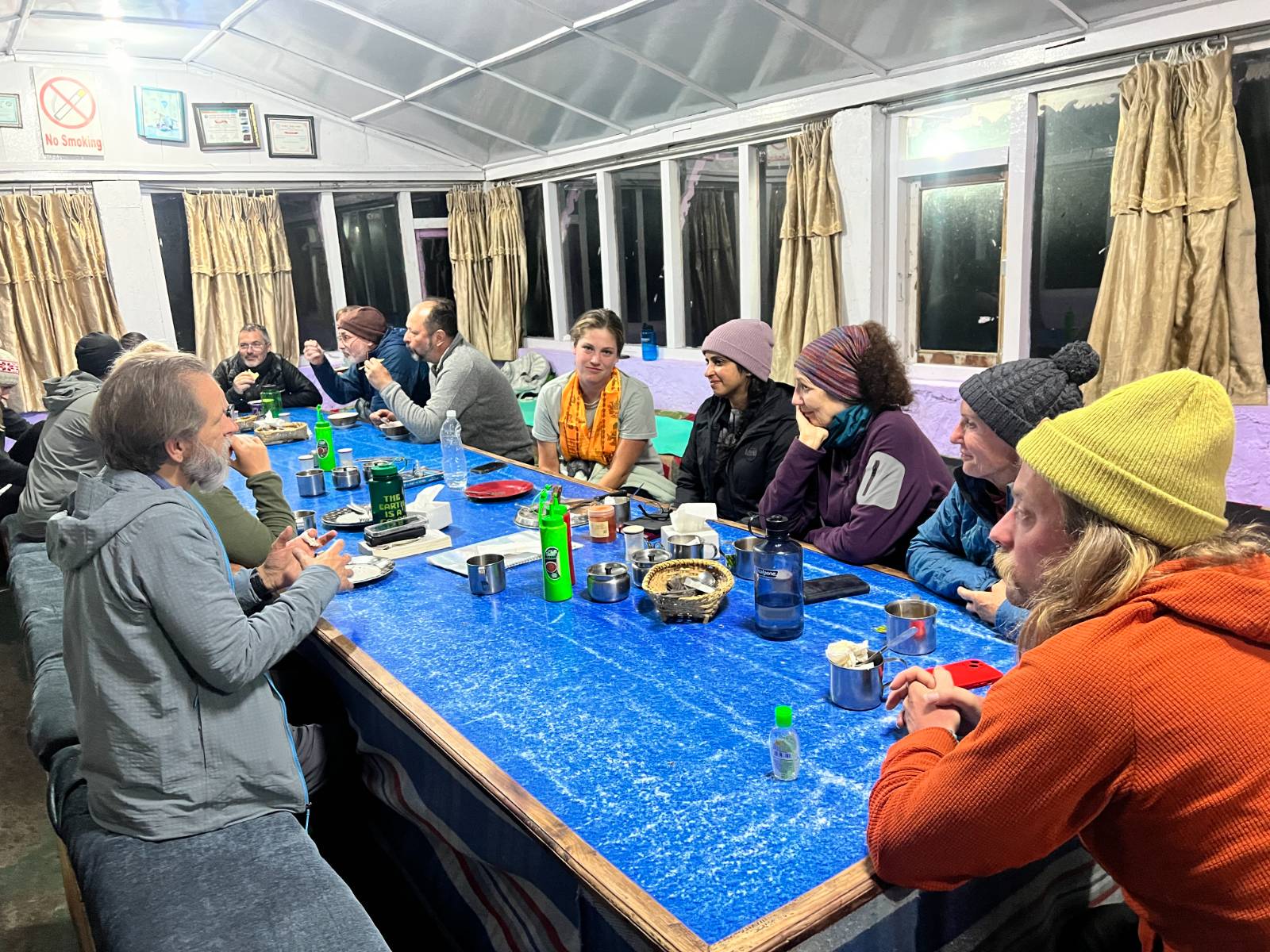
"Trekkers gathering in the Dining hall after a long trek"
Because many Annapurna villages are home to long-established trekking families, food often feels more homely and varied. Meals are freshly prepared using local vegetables and ingredients, and service is generally relaxed and friendly.
In popular villages, dining areas can be busy during peak seasons, but this social atmosphere is part of the Annapurna trekking experience.
Last updated: May, 01, 2026