Accommodation in the Langtang Region
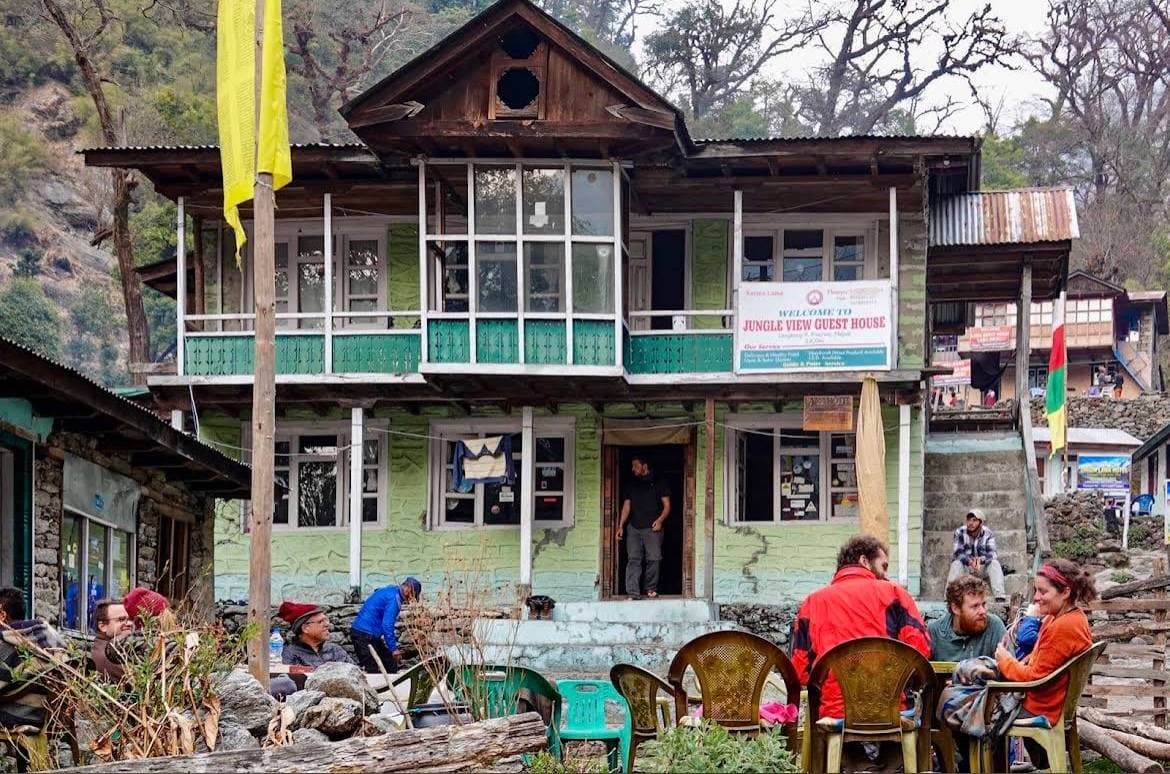
Accommodation along the Langtang Valley trekking route is provided through local tea houses and small mountain lodges, mostly run by Tamang families. These are simple, family-operated places that provide a bed, meals, and a place to rest after a day on the trail.
Compared to Annapurna and Everest, accommodation in Langtang is more basic and quieter. Villages are smaller, options are fewer, and the experience feels more personal and less commercial.
After the 2015 earthquake, many lodges along the Langtang route were rebuilt and improved. Today, accommodation is safe, clean, and suitable for trekking, even though comfort levels remain modest.
How accommodation works with Nepwise
Accommodation is planned and pre-booked in advance for the group. Lodges are selected along the route to ensure a smooth flow, with changes made only if needed due to weather or trail conditions.
All teahouse accommodation during the trek is included in the base package and managed by Nepwise. You don’t need to arrange or pay for rooms separately on the trail.
This helps avoid uncertainty around availability, especially in busy villages, so you can focus on the trek without having to think about where to stay each night.
What staying in Langtang tea houses feels like
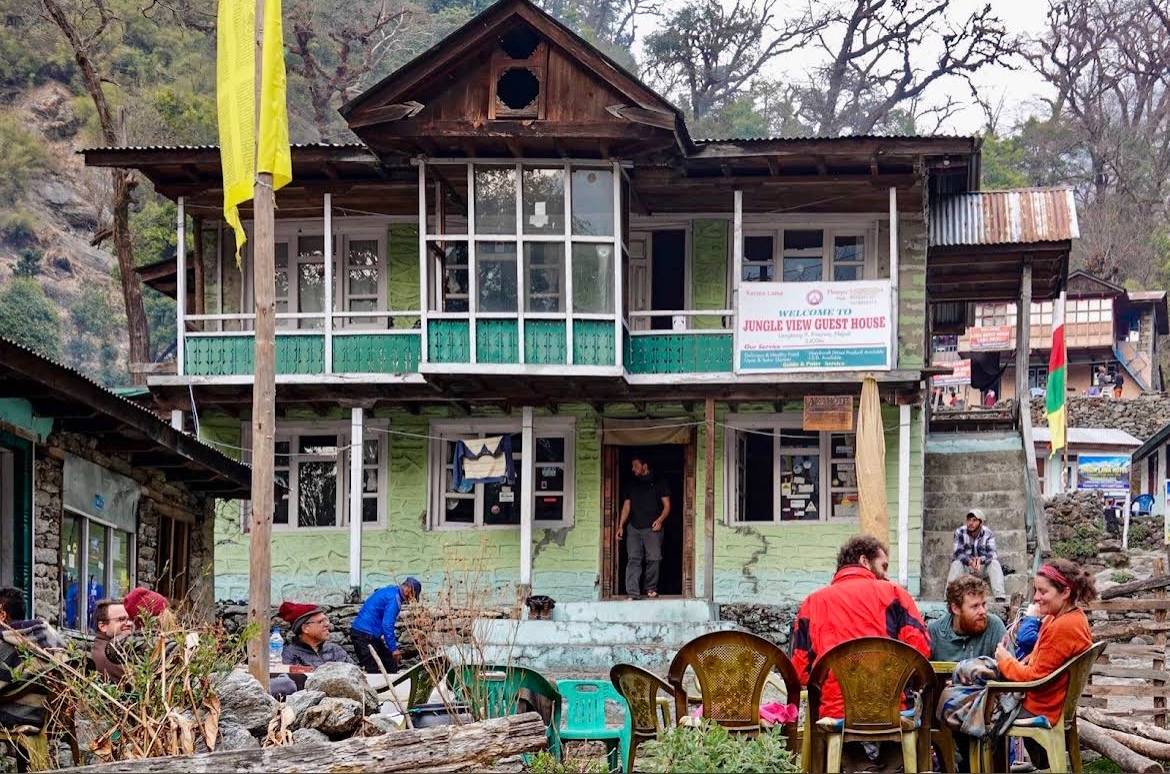
"Typical tea house in Langtang | Image via Jungle View Guest House (Google Maps)"
In lower villages such as Syabrubesi, Bamboo, and Lama Hotel, tea houses are small, family-run lodges with simple rooms and shared facilities. Bathrooms are shared, and hot showers are often available for an extra cost. Electricity for charging devices is generally available, though power may be limited.
As you move higher into villages like Ghodatabela, Langtang Village, and Mundu, facilities become simpler. Lodges are quieter, and evenings are usually spent in the dining hall, which becomes the warm and social center of the lodge.
In higher villages such as Kyanjin Gompa and the upper Kyanjin area, accommodation is basic and practical. Electricity is mostly solar-powered, charging may be limited or cost more, and hot showers are not always available.
Rooms, sharing, and expectations
Rooms in Langtang tea houses are typically twin-sharing, with basic beds, mattresses, pillows, and blankets. Sleeping rooms are not heated, and insulation is minimal, so nights can feel cold, especially at higher elevations.
Private rooms are more likely in lower villages and during quieter seasons. As you go higher or during peak trekking months, room sharing becomes common. This is normal in Langtang and helps ensure everyone has a place to stay.
If a private room is available on a given night, your guide will inform you on the spot. Nepwise does not promise upgrades that the trail cannot reliably support.
Commonly Used Tea Houses Along the Langtang Trail
Along the Langtang Valley trekking route, accommodation is arranged at a small number of locally run tea houses and lodges. Due to limited lodge options and fixed village stops, the same lodges are commonly used along the route.
Accommodation is planned and pre-booked in advance. In rare cases where a listed lodge is unavailable due to weather or trail conditions, accommodation is arranged at a nearby lodge of similar standard.
Village / Area | Commonly Used Tea House |
|---|---|
Syabrubesi | |
Lama Hotel | |
Langtang/Mundu | |
Kyanjin Gompa |
Meals, Wi-Fi, charging, and hot showers
Meals are ordered from the lodge menu. Food is simple, filling, and prepared fresh. Dal bhat is a popular choice and often comes with free refills.
Food prices generally range between NPR 600–900 per meal, depending on altitude.
Wi-Fi is available in some villages, mainly at lower elevations, and is usually paid. Connection quality can be slow or unreliable higher up.
Charging electronic devices typically costs NPR 200–400 per device and often depends on solar power, so availability may be limited.
Hot showers, when available, usually cost NPR 300–500 and depend on water supply and weather conditions.
Toilets and hygiene
Bathrooms in Langtang tea houses are shared. Lower villages often have western-style toilets, while higher villages may have simpler facilities. Hot water availability depends on altitude and weather.
Toilet paper is not provided. Trekkers should carry their own, along with hand sanitizer and basic toiletries. With simple preparation, hygiene along the Langtang trail is manageable even for first-time trekkers.
The tea house experience in Langtang
Evenings in Langtang tea houses are quiet and relaxed. Trekkers gather in the dining area to eat, warm up, and talk before heading to bed early. Mornings are calm, and the pace of life on the trail feels slower and more personal.
Because the Langtang Valley sees fewer trekkers than Annapurna or Everest, many travelers find it easier to connect with lodge owners, guides, and fellow trekkers. This sense of community is a big part of what makes Langtang special.
This isn’t about luxury. It’s about simplicity, culture, and experiencing the mountains at a slower pace.
Last updated: May, 01, 2026